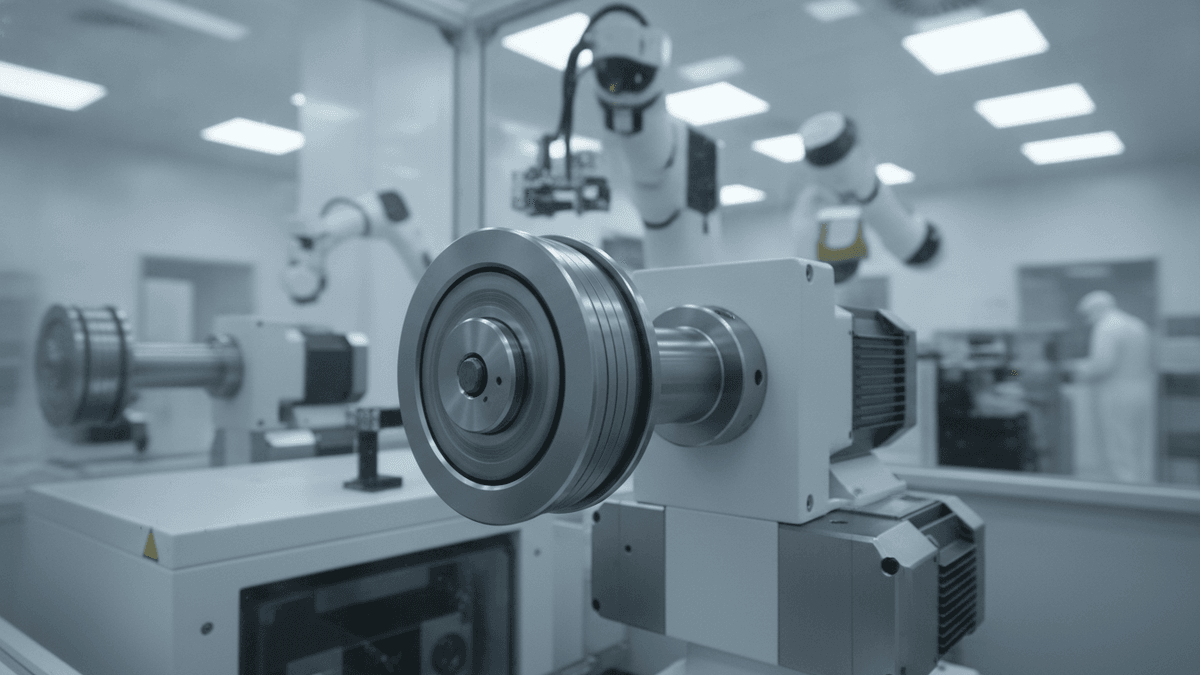
Rotating disk flex coupling in a semiconductor cleanroom
The global market for industrial components, including disk flex couplings, slitting knives for converting, and pneumatic hose assemblies, is poised for substantial growth, projecting a compound annual growth rate (CAGR) of 5.7% for disk flex couplings through 2035. This expansion is largely attributed to the burgeoning demand from the semiconductor industry, fueled by the construction of new fabrication plants (fabs), and the widespread integration of automation and Industry 4.0 principles within smart factories. Pneumatic hose assemblies and slitting knives for converting are also expected to see robust growth at CAGRs of 4.9% and 4.8% respectively, with the latter’s demand bolstered by the electronics film and battery separator sectors.
Manufacturers are increasingly opting for premium materials such as carbide, ceramic, and coated blades to meet the rigorous precision and durability standards demanded by advanced manufacturing processes. The Asia-Pacific region currently leads the market, representing the largest consumer base for these critical industrial components.
The disk flex couplings segment, in particular, is expected to reach 178 index points by 2035, up from an estimated 100 in 2025. This growth is underpinned by the rising adoption of servo and spindle motor systems in precision manufacturing, robotics, and semiconductor fabrication. The market is witnessing a trend towards all-metal disk pack designs and hybrid elastomeric-disk solutions, driven by the need for higher torque density and cleanroom compatibility. The use of stainless steel and high-strength alloy variants has increased significantly, now accounting for approximately 30% of global unit consumption, up from 20% in 2020, highlighting their importance in semiconductor fabs and electronics assembly.
Key growth catalysts include the expansion of semiconductor fabrication capacity, increased demand for high-torque-density and zero-backlash couplings in automated systems, and shorter replacement cycles due to higher machine utilization rates. Conversely, challenges such as volatility in raw material prices, extended lead times for precision-machined components, and high qualification barriers for new suppliers in sensitive supply chains may temper growth.
The demand structure is diversified across several end-use industries. Industrial Automation and Instrumentation is the largest segment, holding a 30% share and expected to grow at a 6.2% CAGR. The Semiconductor and Precision Manufacturing segment, a critical driver, accounts for 25% of the market and is projected to grow at a strong 6.5% CAGR. Regionally, Asia-Pacific continues to dominate, driven by rapid industrialization and substantial investments in semiconductor manufacturing capacity across countries like China, Japan, and South Korea.
About the Author