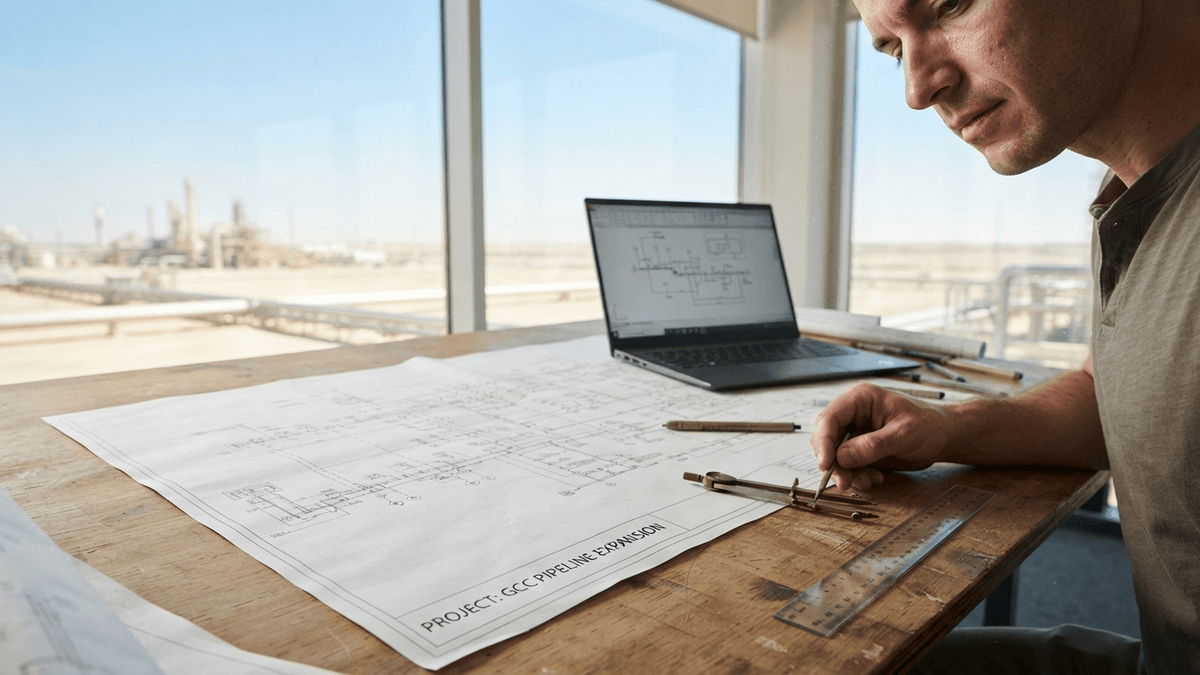
A blueprint for a pipeline network in a regional engineering office.
Engineers India Ltd. (EIL) is signaling potential growth in its international order book, citing a strategic shift by Gulf Cooperation Council (GCC) members to fortify energy infrastructure. Following persistent geopolitical instability near the Strait of Hormuz, Saudi Arabia and the UAE have prioritized the expansion of pipeline networks and strategic storage facilities to ensure uninterrupted export capabilities.
The move reflects a broader trend among major oil exporters to reduce reliance on vulnerable maritime chokepoints. For EIL, a state-owned consultancy and engineering firm, this shift creates a significant addressable market for its expertise in pipeline design, terminal infrastructure, and complex storage projects. The company, which has a long-standing operational history in the Middle East, is positioning itself to secure technical consultancy and project management roles as these capital-intensive projects move through the procurement phase.
Institutional analysts suggest that the urgency of these infrastructure projects could expedite capital expenditure cycles in the region. By diversifying export routes—including land-based pipeline extensions—GCC nations are effectively de-risking their energy supply chains, a move that requires specialized engineering oversight. For EIL, participating in these projects would represent a critical expansion of its international footprint, offsetting domestic cyclicality and tapping into the high-margin infrastructure investment currently characterizing the Gulf energy sector.
About the Author