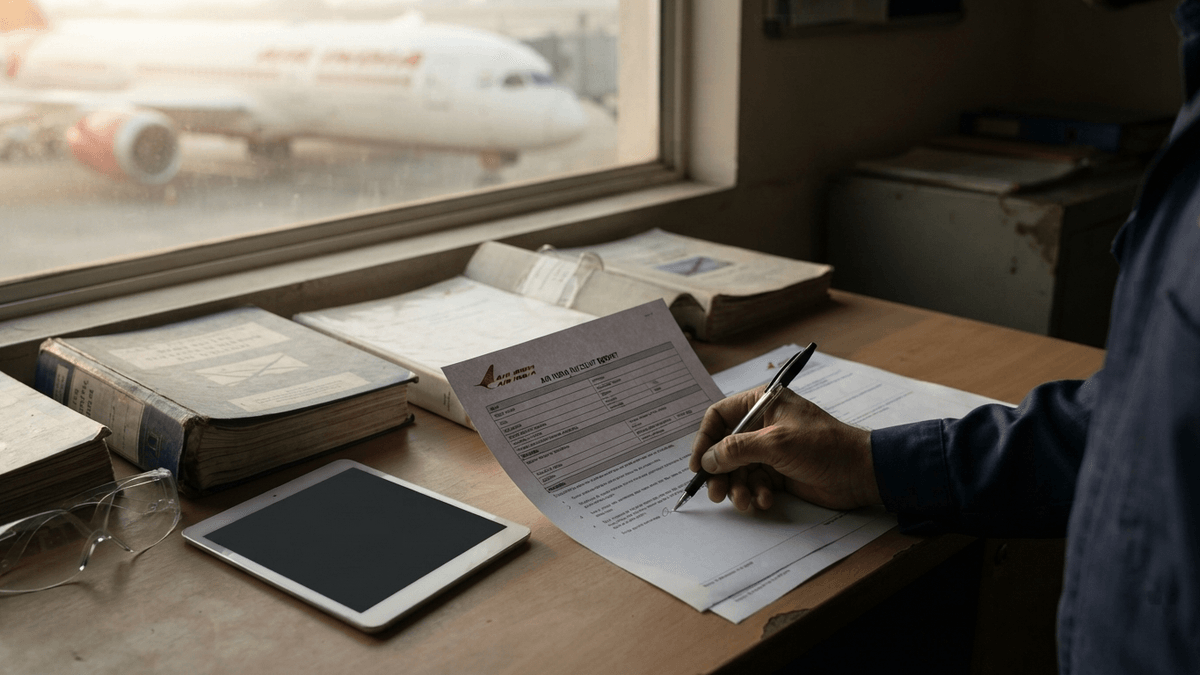
An incident report regarding an Air India flight is reviewed at a maintenance facility.
A recent operational incident involving an Air India flight from Phuket to Delhi has brought significant scrutiny to the airline’s safety and operational risk management protocols. A preliminary investigation identified a hydraulic failure, which led to altitude fluctuations and passenger injuries, prompting a deeper review of the carrier’s technical maintenance procedures, specifically regarding the Power Transfer Unit.
The incident has had immediate personnel consequences, with the pilot-in-command terminated following a positive test for a psychoactive substance. This development has triggered a broader institutional response, as Air India initiates mandatory, voluntary pilot testing programs to fortify its safety standards and operational integrity.
For institutional investors and stakeholders in the aviation and transport sector, this event serves as a critical reminder of the intersection between operational reliability and corporate governance. As the aviation industry continues its post-pandemic recovery, the ability of major carriers to maintain stringent safety protocols and effective human capital management remains a primary indicator of long-term operational sustainability and risk mitigation strategy.
About the Author