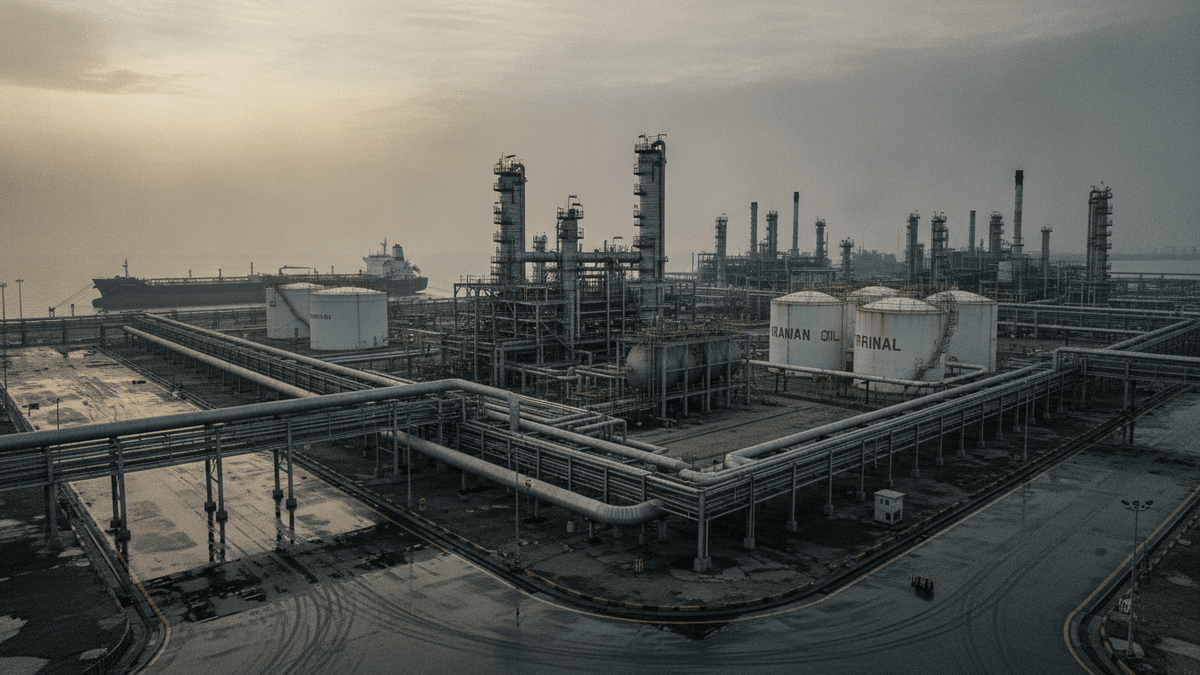
Oil refinery complex with tanker offshore under overcast skies, rain-slicked ground
Global oil prices have defied expectations by remaining below $100 a barrel, even as geopolitical tensions persist in regions like Iran. This sustained lower price point is attributed to a confluence of factors impacting both supply and demand dynamics in the international energy market.
A significant contributor to this trend is China’s substantial reduction in oil imports. As the world’s largest importer, any decrease in demand from China inevitably impacts global price levels. This move by China has created a notable imbalance, contributing to downward pressure on crude prices.
Furthermore, the market is experiencing ‘demand destruction,’ a phenomenon where high prices or other market conditions lead consumers and industries to reduce their overall consumption of oil. This, coupled with increased production from non-OPEC+ nations and regions not directly involved in current supply constraints, has helped to offset potential price hikes.
Refineries are also demonstrating greater flexibility in processing various crude grades and optimizing their output, which contributes to market stability. The improved flow of market information and the strategic release of oil reserves by major consuming nations have also played a role in moderating price volatility.
While the ongoing conflict in Iran remains a significant geopolitical factor, its direct impact on oil prices has been mitigated by these broader market forces, indicating a complex interplay of supply, demand, and strategic considerations shaping the current energy landscape.
About the Author