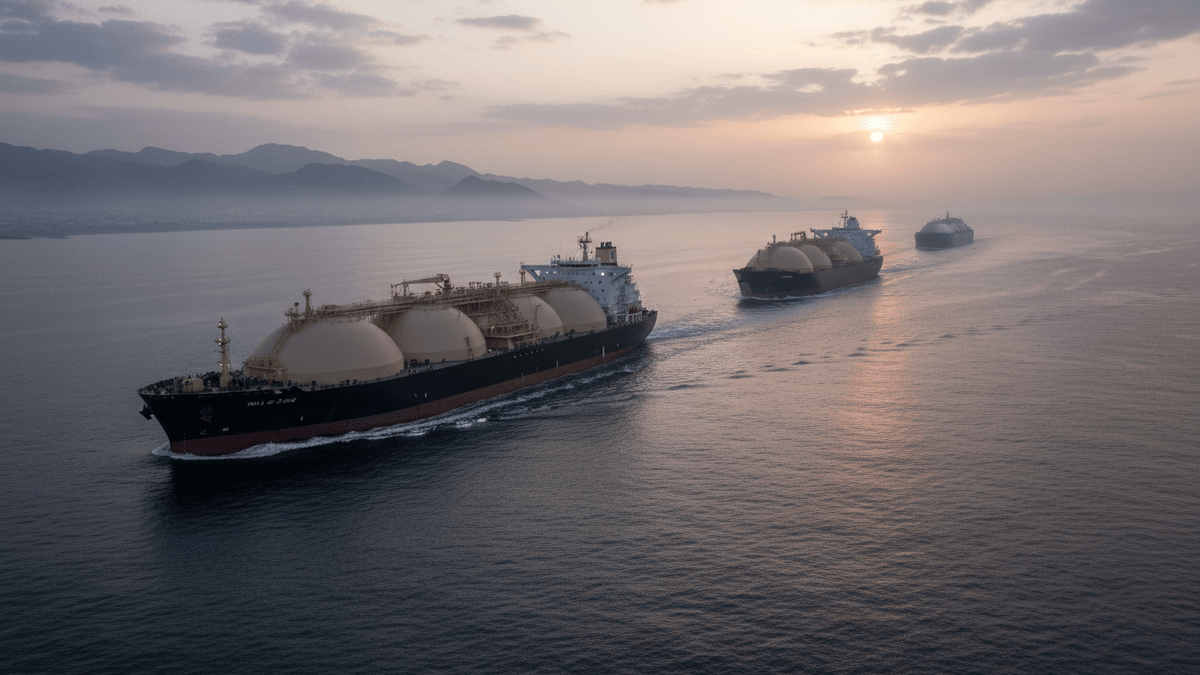
LNG carriers in a "dark transit" convoy through a major shipping lane at sunrise.
The ongoing conflict in West Asia, particularly the tensions surrounding the Strait of Hormuz, is forcing a significant shift in the global liquefied natural gas (LNG) trade. Qatar, a major LNG exporter, has resorted to strategies mirroring the “shadow fleet” tactics traditionally used in the oil industry to maintain its exports through the contested waterway.
LNG carriers are increasingly engaging in “dark transits” by switching off their transponders, often travelling in pairs, to minimize the risk of attacks and avoid drawing attention. This clandestine approach aims to navigate the chokepoint safely, underscoring the heightened security concerns impacting vital energy supply routes.
The situation highlights the fragility of global energy markets when geopolitical instability intersects with critical trade routes like the Strait of Hormuz. The increased use of evasive maneuvers by LNG carriers suggests a growing unease among shipping operators and a potential impact on the predictability and cost of gas supplies.
About the Author