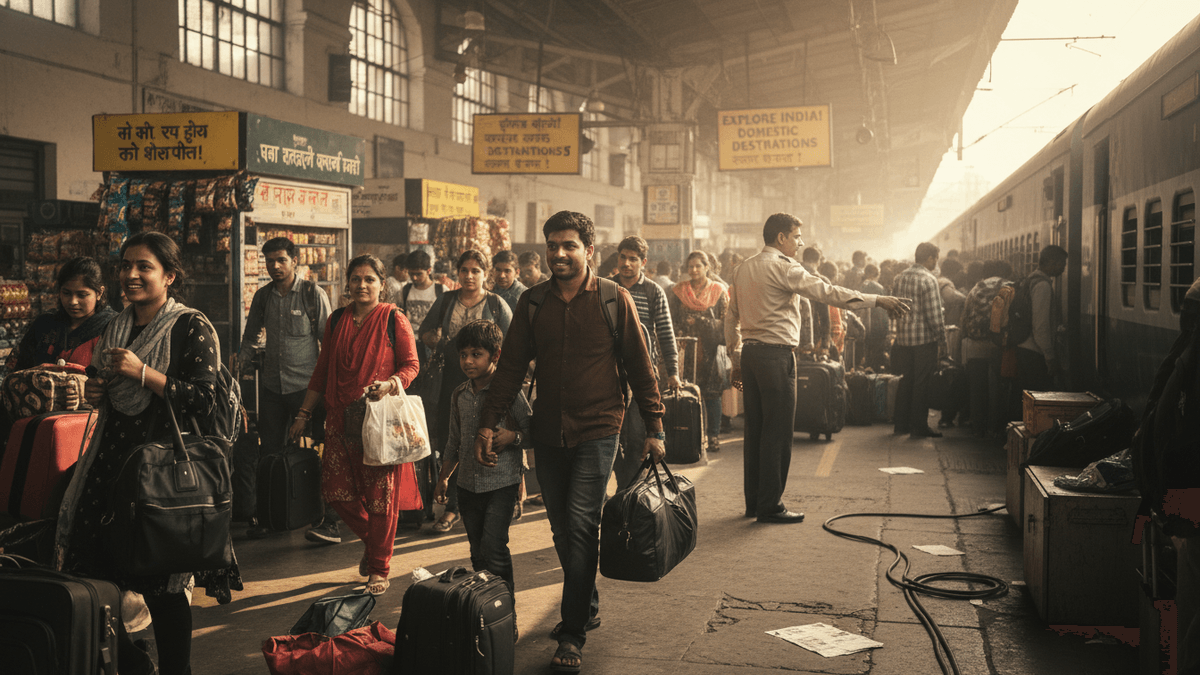
Indian travelers at a bustling railway station, embracing domestic destinations.
New Delhi, India – Prime Minister Narendra Modi’s recent appeal to Indians to prioritize domestic travel for the next year is expected to significantly reshape the country’s tourism landscape. This strategic move, aimed at bolstering local tourism, conserving foreign exchange reserves, and reducing the import bill, comes at a time of heightened geopolitical instability in West Asia.
Industry experts anticipate a substantial uptick in domestic travel as a direct consequence of this initiative. Airlines, hotels, and tour operators across India are likely to witness a surge in bookings and demand. This shift towards ‘staycations’ and local exploration is not only a response to global uncertainties but also a deliberate policy to foster economic growth within the country.
The potential benefits extend beyond immediate revenue generation for the tourism sector. Increased domestic tourism can stimulate investment in local infrastructure, create employment opportunities, and promote regional development. By encouraging citizens to explore India’s diverse cultural and natural heritage, the government aims to build a more resilient and self-sufficient tourism ecosystem.
While the specific impact of the West Asia crisis on oil prices and flight disruptions is a contributing factor, the core of this initiative is a proactive economic strategy. The focus on domestic consumption and investment aligns with broader goals of strengthening India’s economic base and reducing reliance on external factors.
About the Author