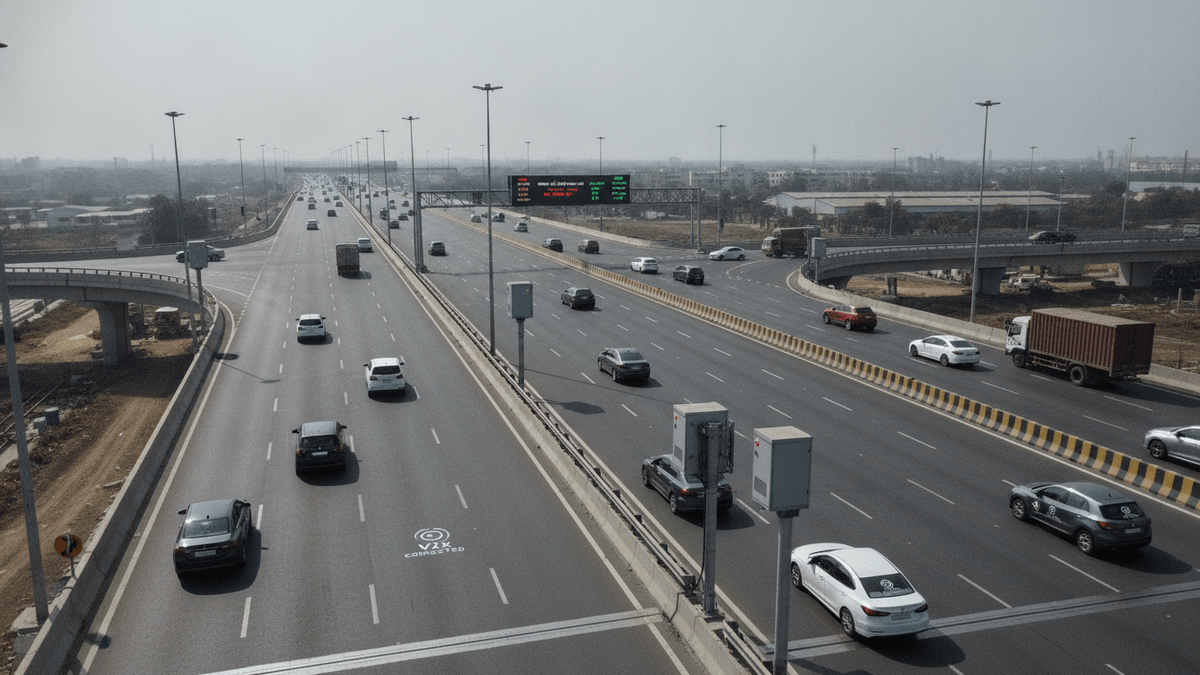
Elevated view of a multi-lane highway with scattered traffic and digital signboards.
India’s telecommunications sector, traditionally driven by spectrum auctions, tower infrastructure, and consumer tariffs, is poised for a new growth phase centered on connected vehicles and smart highways. The Telecom Regulatory Authority of India (TRAI) has initiated discussions on Vehicle-to-Everything (V2X) communication, signaling a potential shift in investment focus towards intelligent transportation systems.
The TRAI’s consultation paper on V2X communication outlines a future where vehicles, road infrastructure, traffic management systems, and cloud platforms can interact in real-time. This connectivity is envisioned to be powered by Cellular V2X (C-V2X) technology, leveraging existing 4G and emerging 5G networks. This development could unlock new opportunities for telecom operators, technology providers, and infrastructure investors in India’s rapidly expanding automotive and digital ecosystems.
While the current focus is on policy and technological frameworks, the implications for private capital are significant. Investments in V2X technology could span across network infrastructure upgrades, software development for vehicle communication, and the deployment of roadside units. The push towards connected mobility aligns with India’s broader goals of enhancing road safety, optimizing traffic flow, and fostering a robust automotive industry.
The transition to connected car technology on Indian highways represents a convergence of the telecom and automotive sectors, creating a fertile ground for strategic investments and partnerships. As the regulatory landscape takes shape, stakeholders in the private equity and venture capital space will be closely watching the evolution of V2X communication as a potential driver of future returns in India’s digital infrastructure and mobility markets.
About the Author