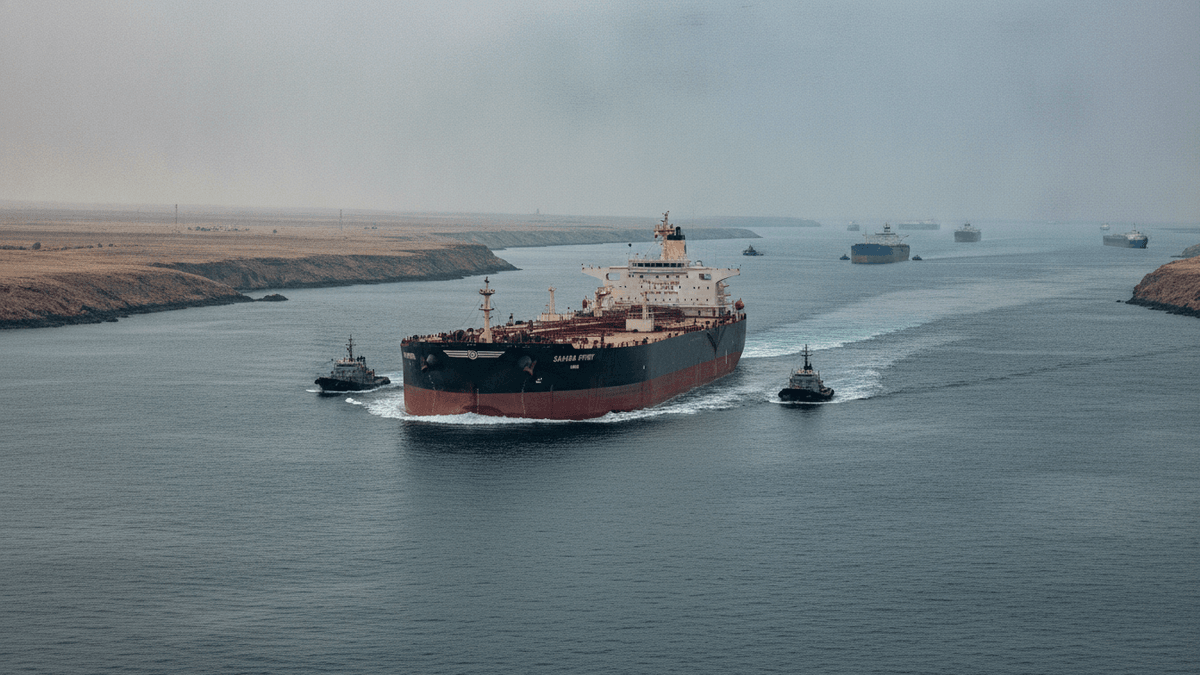
Crude oil tanker transiting a narrow waterway with tugboat escort under overcast sky.
India’s crude oil import landscape is poised for significant relief as the Strait of Hormuz is set to reopen on a “toll free” basis, following a ceasefire agreement between the United States and Iran. This development is expected to mitigate risks associated with oil supply disruptions and contribute to the stabilization of global energy markets.
The normalization of trade through this critical chokepoint is anticipated to lead to a reduction in freight costs for oil transportation. This decrease in costs, coupled with a more stable energy supply, is projected to ease inflationary pressures within India, a key concern for policymakers and the economy. The strategic importance of the Strait of Hormuz cannot be overstated, as it is a vital transit route for a substantial portion of the world’s oil supply.
The US-Iran truce deal’s direct impact on easing oil supply risks for India underscores the interconnectedness of geopolitical stability and global energy security. The anticipated stabilization of global energy markets will likely benefit various sectors of the Indian economy heavily reliant on energy imports, providing a more predictable environment for investment and economic planning.
About the Author