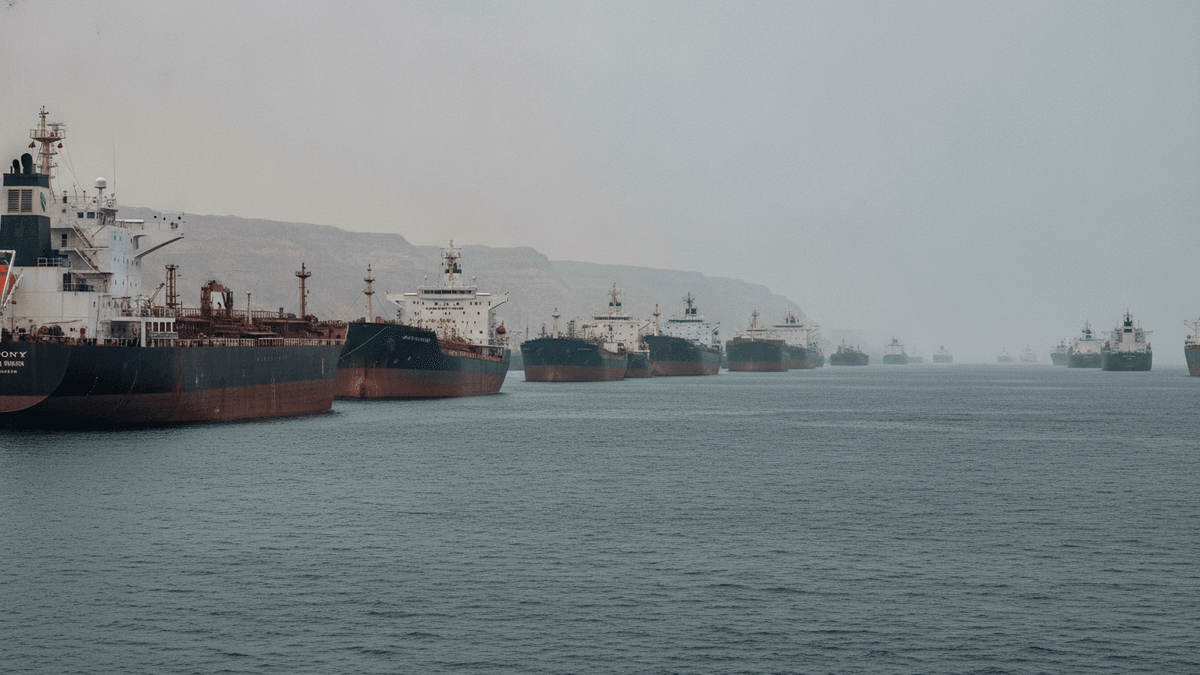
Tankers and cargo ships anchored in a holding pattern near a barren coastline
Shipowners and traders are cautiously monitoring developments surrounding a potential deal between the US and Iran that could see the reopening of the Strait of Hormuz, a critical artery for global oil and gas transportation. The disruption in this vital waterway has led to a significant backlog, with approximately 600 vessels reportedly awaiting clarity and safe passage.
The announcement of a potential US-Iran agreement has brought a glimmer of hope, but industry stakeholders remain concerned about the practical implications. Key issues include ensuring the safety of vessels, the presence of naval mines, and the potential for unpredictable actions by Iran. These persistent concerns have left hundreds of ships stranded and cast a shadow over global energy trade security.
The Strait of Hormuz is a chokepoint through which a significant portion of the world’s oil supply transits. Any prolonged disruption or uncertainty in this region has the potential to impact global energy prices and supply chains. As shipowners and traders await concrete details on the terms and enforcement of the proposed deal, the future of maritime trade through the Strait remains in a state of flux.
About the Author