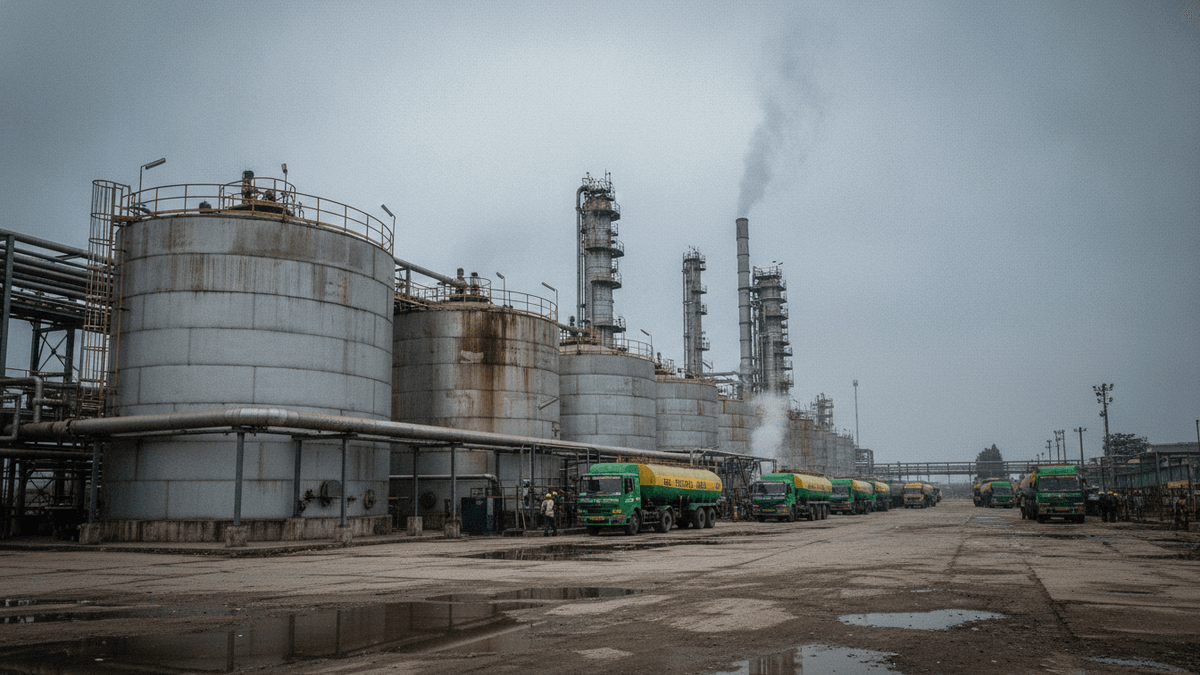
Ethanol refinery in India with tanker trucks loading under an overcast sky.
A recent analysis by KPMG suggests that India’s ongoing transition in ethanol utilization, moving beyond simple blending, could establish it as a crucial “Transport Energy Backbone.” This strategic shift is poised to significantly shield the Indian economy from the volatility of global oil prices and enhance national energy security.
The report highlights that by evolving ethanol’s role to become a primary energy source for transportation, India can better manage the unpredictable fluctuations in international fuel markets. This adaptive approach to fuel consumption is seen as a key strategy to reduce the country’s reliance on external price volatility.
Achieving this transition will necessitate the development of an adaptive fuel system, the implementation of varied distribution networks for ethanol, and the widespread adoption of flex-fuel vehicles. These components are critical for ensuring the smooth and effective integration of ethanol as a major transport energy contributor.
The proposed shift aims to bolster India’s energy security by diversifying its fuel sources and reducing dependence on imported crude oil. This proactive measure could lead to greater economic stability by insulating consumers and industries from the immediate impacts of global oil market disruptions.
About the Author