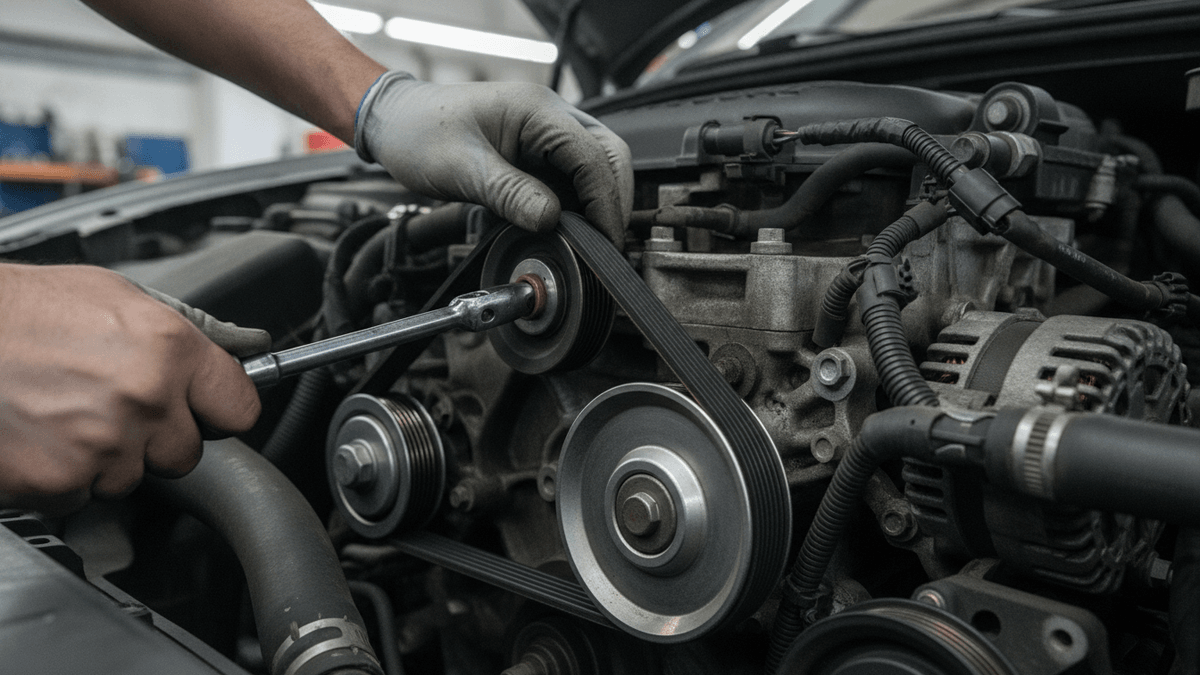
Mechanic inspects serpentine belt in engine bay
The global serpentine belts market is anticipating robust growth, with a projected compound annual growth rate (CAGR) of 4.6% from 2026 to 2035, according to a report by IndexBox. This expansion is largely attributed to consistent demand from the aftermarket replacement sector and the increasing adoption of hybrid powertrains and industrial automation solutions.
While the automotive industry’s shift towards battery electric vehicles (BEVs) may reduce the traditional belt content per vehicle, the market’s overall growth is expected to be sustained by the production of hybrid electric vehicles (HEVs) and the continued prevalence of internal combustion engines (ICEs) in emerging economies. The aftermarket segment is a significant demand driver, accounting for approximately 60% of the unit volume. This is fueled by an aging global vehicle fleet that requires periodic maintenance and replacements.
Beyond the automotive sector, industrial applications are also contributing to market expansion. High-performance belts are seeing above-average growth, driven by demand from automation equipment, semiconductor handling systems, and stationary engines. Geographically, the Asia-Pacific region dominates serpentine belt supply, holding 60-70% of global production capacity. However, North America and Europe are significant importers of standard-grade belts, potentially facing logistical challenges and tariff-related vulnerabilities.
The market is characterized by increasingly stringent supplier qualification standards, with buyers demanding certifications such as ISO 9001 and IATF 16949, alongside material traceability and dynamic load test reports. Key demand drivers identified include the expanding global vehicle parc, the increasing average age of vehicles, growth in HEV production, the rise of industrial automation and robotics, and the digitalization of aftermarket distribution channels.
Conversely, the market faces constraints including raw material price volatility for synthetic rubber and aramid cord, lengthy supplier qualification lead times for OEM programs (8-12 months), cross-border trade friction due to inconsistent tariff classifications, and the long-term impact of the transition to BEVs.
In terms of demand segmentation, passenger cars and light trucks represent 45% of global demand, followed by heavy-duty commercial vehicles (20%), industrial machinery and stationary engines (15%), off-road and agricultural equipment (10%), and aftermarket distribution (10%). Regionally, Asia-Pacific leads both demand and production (55%), with North America (20%) and Europe (15%) also holding significant shares.
Prominent market participants include Continental AG, Gates Corporation, Bando Chemical Industries, Mitsuboshi Belting Ltd., and Dayco Products LLC. The report’s scope covers serpentine belts for various applications and related components sold in kits, such as multi-ribbed belts, tensioners, and idler pulleys.
About the Author