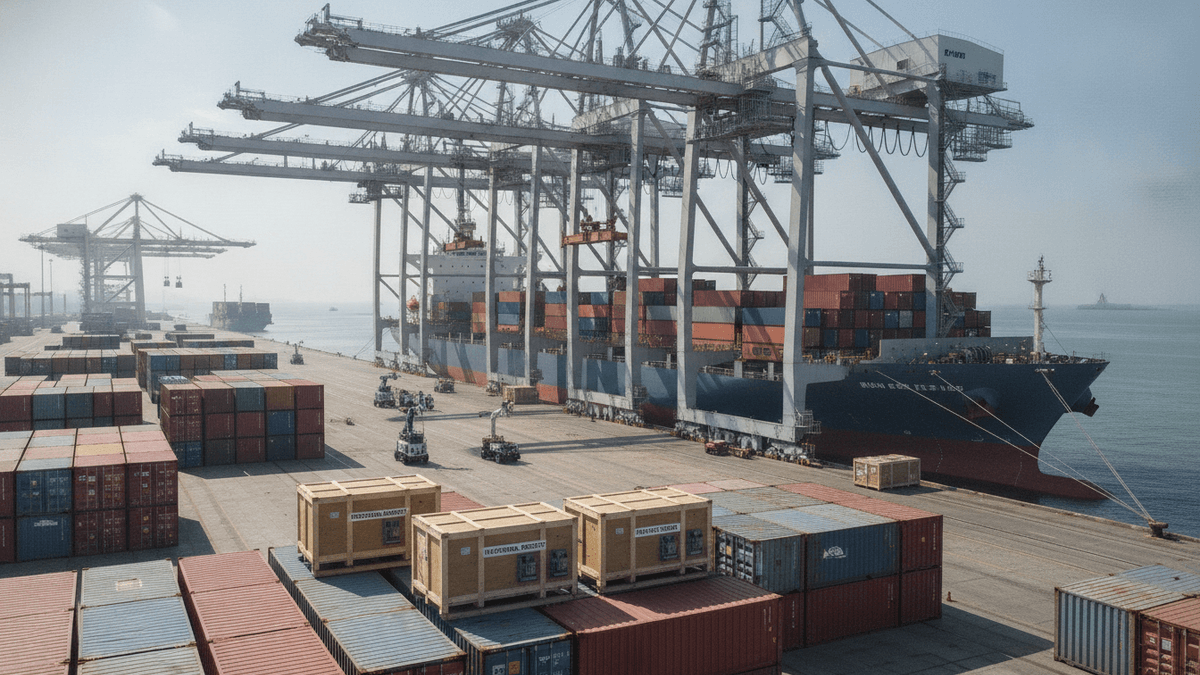
Loading industrial equipment and high-tech components at an international shipping port in China.
China’s export performance in July significantly surpassed expectations, with a 23.9% year-on-year increase in U.S. dollar terms. This robust growth is largely propelled by the global boom in artificial intelligence infrastructure, which has spurred demand for Chinese-manufactured components and advanced industrial equipment.
The surge is particularly evident in high-tech sectors. Exports of integrated circuits nearly doubled in the first seven months of the year compared to 2025, with a notable 117% jump recorded in July alone. Furthermore, mechanical and electrical products, encompassing electric vehicles, lithium batteries, wind-power equipment, 3D printers, and industrial robots, constituted over 60% of total exports during this period. This composition highlights a strategic shift towards higher-value, technology-intensive goods in China’s export portfolio.
However, this export-driven growth occurs against a backdrop of persistent domestic economic challenges. China’s economy expanded by only 4.3% in the second quarter, marking its slowest growth since late 2022. Retail sales growth remains subdued, indicating weak household consumption. The property sector also continues to face significant headwinds.
The imbalance between strong external demand and tepid domestic consumption has resulted in a substantial trade surplus of $112.5 billion in July. This situation has drawn criticism from major trading partners, including the United States and the European Union, who are advocating for a rebalancing of China’s economic model towards greater reliance on domestic consumption rather than export-led manufacturing. While China’s export engine, especially in technology, demonstrates resilience, the ongoing domestic weakness and the resultant trade surplus underscore an unresolved economic imbalance that could potentially lead to increased trade friction.
About the Author