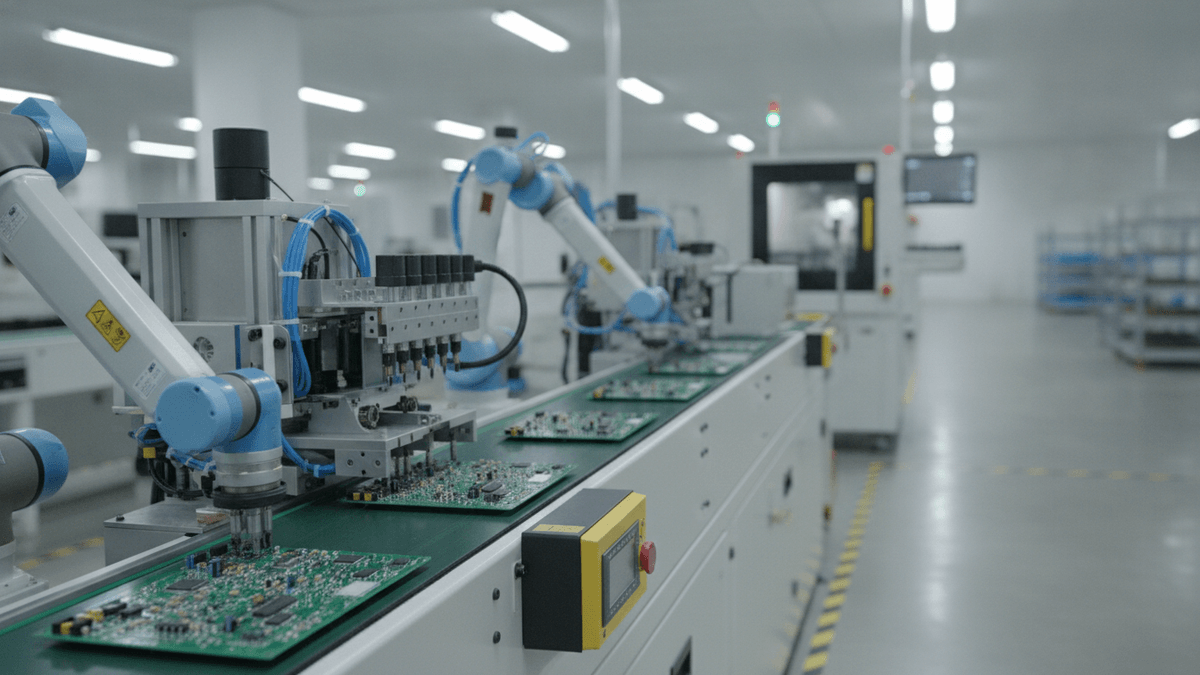
Automated Surface-Mount Technology (SMT) line assembling components onto PCBs.
The global battery charger market is experiencing robust expansion, with projections indicating a rise from USD 28.04 Billion in 2025 to USD 40.71 Billion by 2034, at a Compound Annual Growth Rate (CAGR) of 4.2%. This growth trajectory, detailed in a recent project report, is largely fueled by the increasing adoption of consumer electronics, electric vehicles (EVs), and renewable energy storage systems.
Establishing a battery charger manufacturing plant with an annual capacity of 5 to 10 million units is identified as a commercially viable venture. The report outlines the financial landscape, forecasting gross profits between 30-40% and net profits of 12-18%. Key operational expenditures are dominated by raw materials such as PCBs, transformers, and capacitors, accounting for 70-80% of costs.
Essential machinery for such a facility includes Surface-Mount Technology (SMT) lines, wave soldering machines, reflow ovens, and automated testing and packaging systems. The manufacturing process involves circuit design, component sourcing, PCB assembly, quality control, and final packaging.
Investment opportunities are significant due to the expanding use of rechargeable batteries, the rapid growth in the EV and renewable energy sectors, and ongoing innovations in charging technology. Leading players in the industry include Battery Tender, CTEK, and NOCO, with recent developments like Bel Fuse’s liquid-cooled on-board battery charger and BYD’s advanced battery technologies underscoring the sector’s dynamism.
About the Author