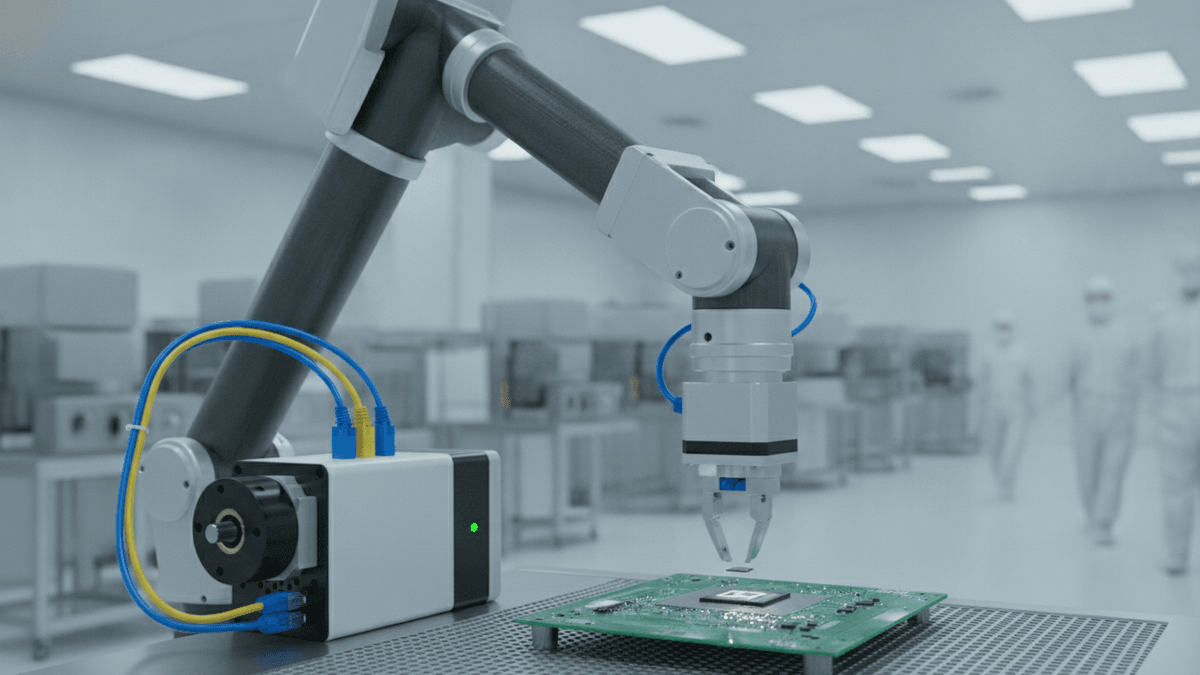
Robotic arm with integrated stepper motor placing a microchip in a cleanroom.
The global stepping systems market is set for sustained expansion, projecting a mid-single-digit compound annual growth rate (CAGR) through 2035. This growth trajectory is primarily fueled by the increasing adoption of factory automation, escalating demands for precision manufacturing, and the necessary replacement of existing electromechanical components.
A significant market trend is the transition from open-loop to closed-loop architectures. This shift is facilitated by the integration of cost-effective encoders and improvements in torque stability, offering enhanced performance and reliability. Furthermore, Industrial Ethernet connectivity, incorporating protocols like EtherCAT and PROFINET, is becoming a standard in new drive designs, enhancing communication and control capabilities.
Miniaturization is another key driver, opening up new application possibilities in compact laboratory instruments and portable diagnostic equipment. Despite facing challenges such as the price volatility of rare-earth magnets and power semiconductors, along with intense competition, the market is expected to achieve an approximate 5.2% CAGR from 2026 to 2035.
Key demand drivers underpinning this growth include the accelerating pace of Industry 4.0 adoption, the continuous need for precision positioning in semiconductor manufacturing, and the recurring replacement cycle of components. The market is segmented across several key sectors: industrial automation, electronics, semiconductor manufacturing, OEM integration, and consumables. Regionally, the Asia-Pacific demonstrates leading demand, reflecting its robust manufacturing base.
By 2035, closed-loop and integrated stepper drive solutions are anticipated to capture over 35% of new system sales, a notable increase from approximately 22% in 2026. This trend underscores a growing user preference for energy efficiency and precise position verification. The adoption of networked drives utilizing industrial Ethernet is projected to exceed 70% of new installations in high-value manufacturing regions by 2030.
Supply-side dynamics include ongoing consolidation among component suppliers and a gradual shift of production capacity towards Southeast Asia. The report by IndexBox highlights that while challenges like price fluctuations and competition exist, the fundamental drivers of automation and precision technology ensure a positive outlook for the stepping systems market.
About the Author