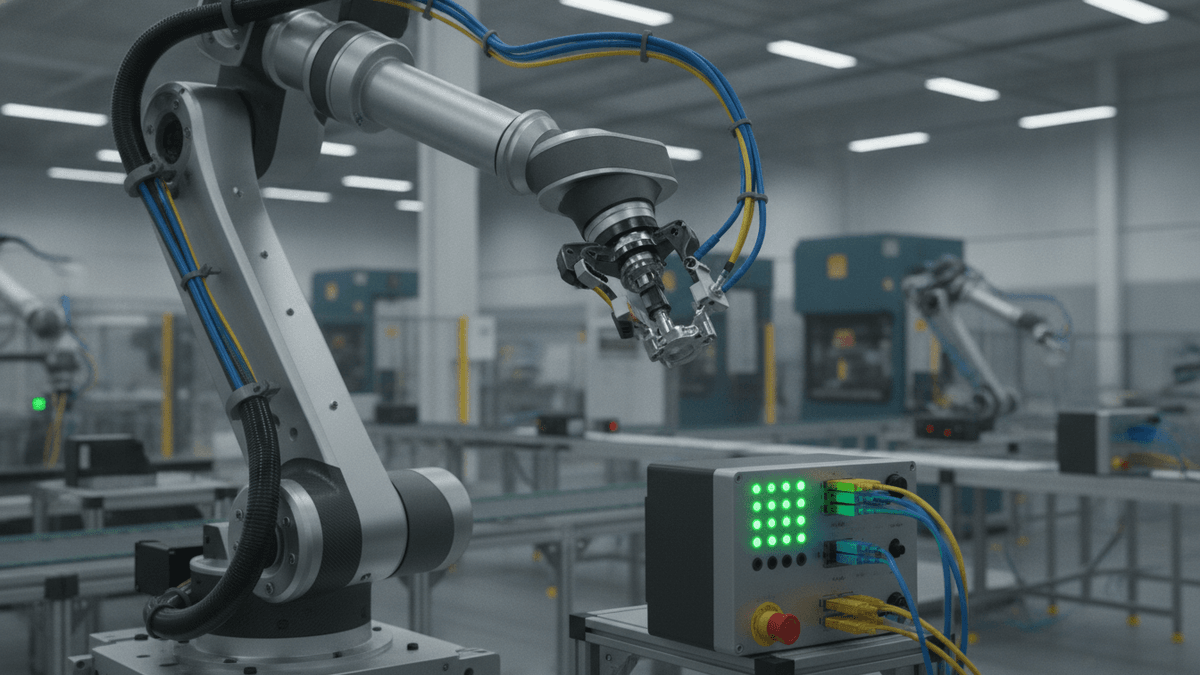
Industrial robotic arm and control unit in a factory.
Beckhoff is proactively addressing the increasingly stringent security requirements being introduced by upcoming European Union regulations, specifically the Cyber Resilience Act (CRA) and the revised Machinery Regulation. These legislative developments are poised to significantly impact the industrial automation sector, demanding enhanced cybersecurity measures for connected products.
The Cyber Resilience Act aims to establish a baseline of cybersecurity for all products with digital elements placed on the EU market, while the Machinery Regulation updates safety standards for machinery, increasingly incorporating digital and connected functionalities. For manufacturers like Beckhoff, this means a heightened focus on secure design, vulnerability management, and ongoing security updates throughout the product lifecycle.
Beckhoff’s commitment to meeting these growing security demands signifies a broader trend within the industrial automation industry. As machinery becomes more interconnected and reliant on software, ensuring the resilience of these systems against cyber threats is paramount. The company’s efforts are likely to involve strengthening its product development processes, enhancing its security testing protocols, and potentially offering new services to support customers in maintaining compliance and security post-deployment.
The implications of these regulations extend beyond mere compliance; they are driving innovation in cybersecurity for industrial applications. Beckhoff’s response underscores the critical role of robust security in the future of automation, where operational technology (OT) must be as secure as information technology (IT) to prevent disruptions, protect sensitive data, and ensure the integrity of industrial processes.
About the Author