Ford's Legendary 300 Inline-Six: A Workhorse Engine's Enduring Legacy
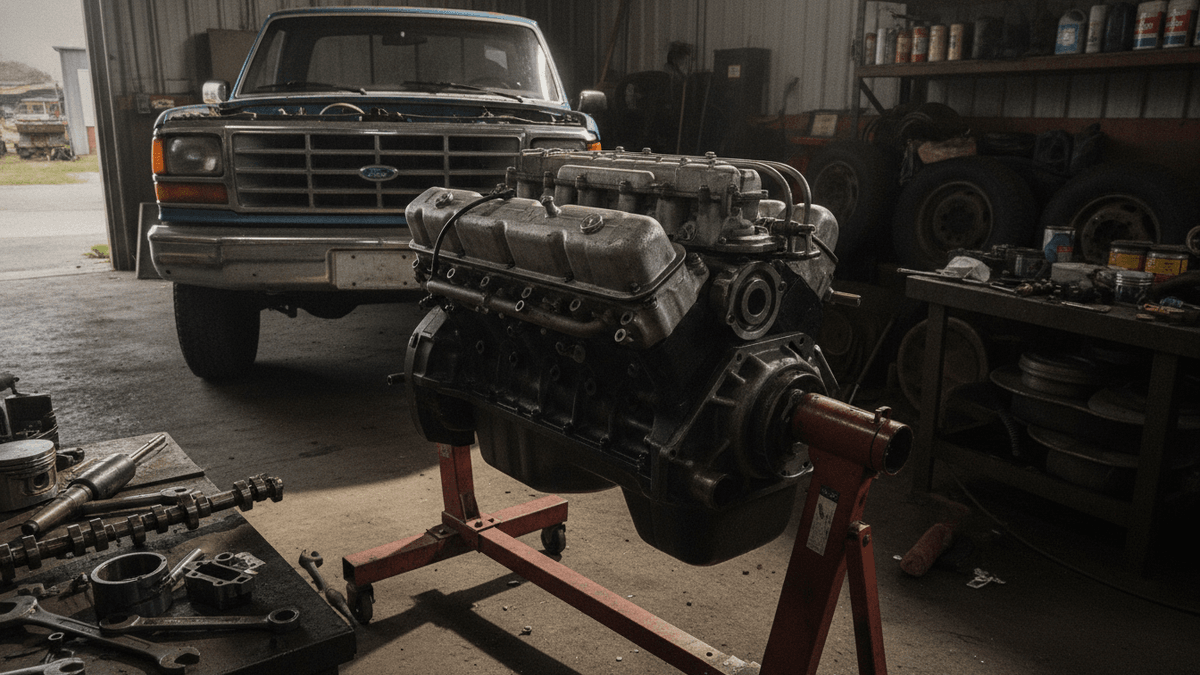
The Ford 300 cubic-inch (4.9-liter) Inline-Six engine, produced from 1965 to 1996, carved out a unique niche in automotive and industrial history, not through high performance, but through unparalleled reliability and robust design. This engine became a cornerstone for heavy-duty applications, powering generations of Ford F-Series trucks, Econoline vans, and a wide array of industrial machinery.
Its legendary status is attributed to several key design features: a long-stroke configuration optimized for low-end torque, seven main bearings for enhanced durability, a gear-driven camshaft ensuring precise timing, and a simple, over-engineered valvetrain that contributed to its near-indestructible nature. These characteristics made the 300 Inline-Six exceptionally resilient, capable of enduring extreme neglect and accumulating high mileage while remaining functional.
The engine’s widespread use in American industry was facilitated by readily available parts and straightforward maintenance. Even as emissions regulations tightened, Ford adapted the engine, introducing electronic fuel injection in 1987. This update improved performance and efficiency without compromising the core durability that defined the 300 Inline-Six.
Beyond its commercial and industrial applications, the engine’s legacy persists among automotive enthusiasts. It is frequently modified for high-horsepower builds and robust off-road vehicles, cementing its reputation as a definitive work truck engine whose influence continues to be felt today.
About the Author