Air Amplifier Station in semiconductor fabrication
The global Air Amplifier Stations market is set for substantial expansion, projecting a compound annual growth rate (CAGR) of 6-8% from 2025 through 2035. This growth trajectory is primarily driven by the escalating demand for industrial automation, the robust development of semiconductor fabrication facilities worldwide, and the ongoing replacement of older systems with advanced, quality-driven solutions in high-technology manufacturing sectors.
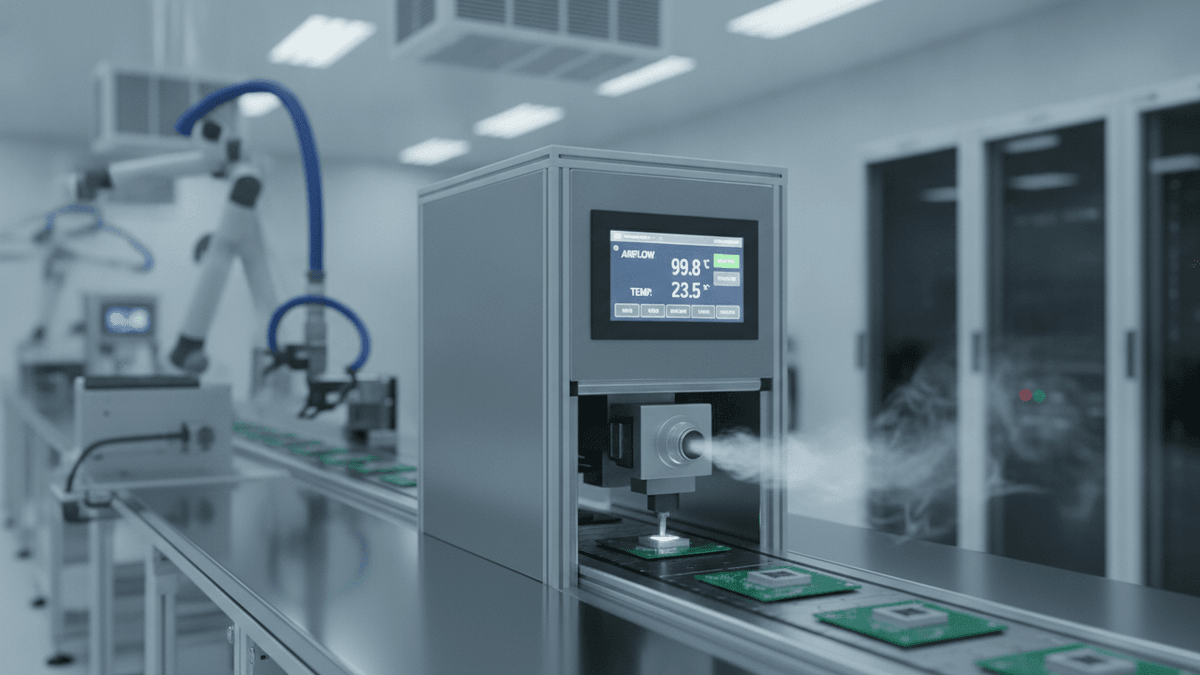
Air amplifier stations play a critical role in numerous industrial applications, including air-moving, cooling, drying, and conveying, by amplifying compressed air input to generate high-velocity, low-pressure output. The market is observing a trend towards integrated, digitally monitored systems that support predictive maintenance and optimize pneumatic networks, thereby increasing the value of installed systems and accelerating the replacement of standalone units.
Asia-Pacific currently leads global demand, accounting for 35-40%, owing to its significant presence in electronics assembly, semiconductor fabrication, and industrial machinery production. Key growth catalysts include industrial automation upgrades, semiconductor fab expansions, and energy efficiency regulations. However, the market faces challenges such as extended supply chain lead times, potential shortages of precision components, and raw material price volatility.
The demand is segmented by end-use industries, with industrial automation and instrumentation representing the largest share (40%), followed by electronics and optical systems (25%), and semiconductor and precision manufacturing (20%). The semiconductor and precision manufacturing segment is identified as the fastest-growing, with an annual expansion rate of 8-10%.
Major market participants include Exair Corporation, Nex Flow Air Products Corp, Silvent AB, Vortec (ITW Air Management), Festo AG & Co. KG, SMC Corporation, Parker Hannifin Corporation, Bosch Rexroth AG, Coval, Aventics, Meech International, and Simco-Ion. Regionally, Asia-Pacific dominates, followed by North America (25%) and Europe (22%), both experiencing growth from reshoring initiatives and factory modernization. Latin America and the Middle East & Africa represent smaller but expanding markets.
About the Author