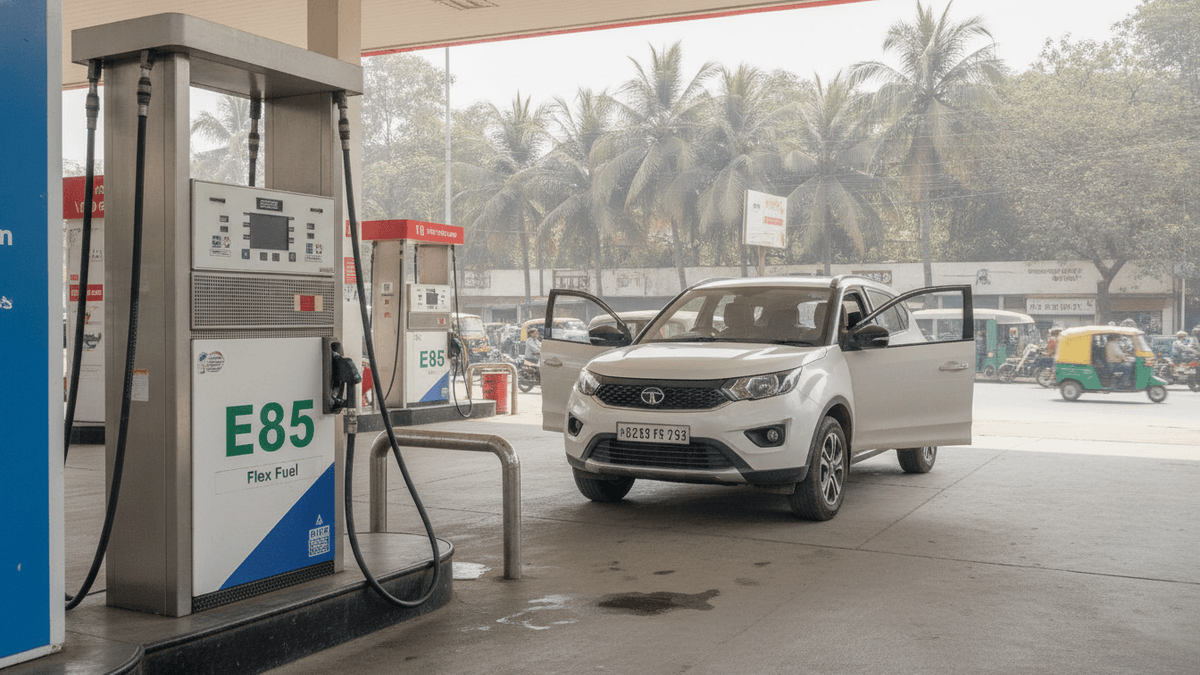
E85 fuel pump at a modern fuel station in India
India is embarking on an ambitious strategy to decarbonize its road transport sector by promoting the widespread adoption of E85 fuel and flex-fuel vehicles. This initiative, spearheaded by government policy changes, aims to extend the lifespan of internal combustion engine (ICE) vehicles while simultaneously reducing emissions. However, the strategy is encountering significant headwinds, with automakers exhibiting caution, consumers remaining unconvinced, and industry experts expressing reservations.
Unlike regions such as China and Europe, which are prioritizing a definitive shift away from conventional engines towards electric mobility, India’s approach seeks to integrate cleaner fuel alternatives within the existing ICE framework. The rollout of E85 fuel and the push for mass flex-fuel deployment represent a unique path in global efforts to achieve cleaner transportation.
Despite the government’s intentions, the automotive industry appears hesitant to fully commit. Automakers are reportedly treading cautiously, likely due to uncertainties surrounding infrastructure development, consumer acceptance, and the long-term viability of ethanol-blended fuels. Consumers, on the other hand, have yet to be convinced of the benefits or practicality of E85 fuel, raising questions about market demand and adoption rates.
Furthermore, experts in the field are voicing concerns about the strategy’s effectiveness and potential challenges. Their wariness stems from various factors, possibly including the sustainability of ethanol production, the impact on engine performance and maintenance, and the overall economic feasibility of such a large-scale transition. The divergence in perspectives highlights the complex landscape India must navigate to achieve its decarbonization goals in the road transport sector.
About the Author