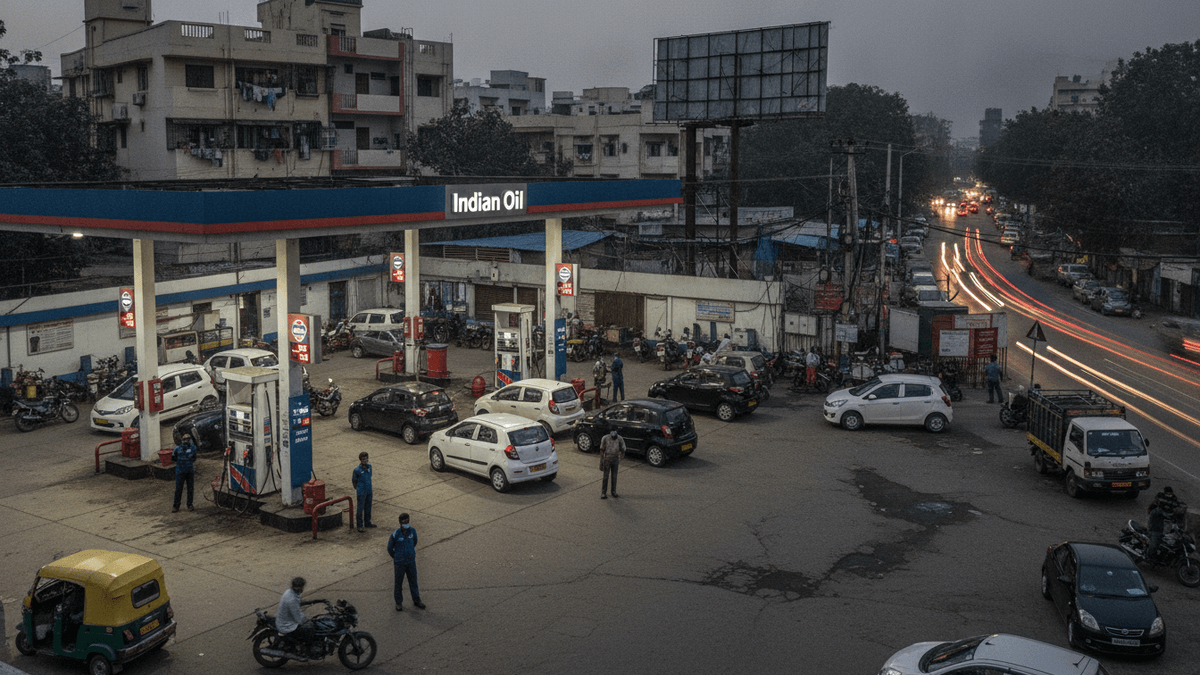
Indian Oil fuel station at dusk in an urban Indian environment.
New Delhi, India – India’s major state-owned fuel retailers, including Indian Oil, BPCL, and HPCL, are reportedly approaching their borrowing limits as they grapple with substantial revenue losses. This financial strain is a direct consequence of selling essential fuels like petrol, diesel, and LPG at prices significantly below market rates, a situation exacerbated by modest price adjustments compared to global trends.
According to an official familiar with the matter, these companies incurred revenue losses amounting to one trillion rupees (approximately $12 billion USD) in the first quarter of the current year. This financial pressure is compelling them to increase their borrowing to manage operational costs and meet demand. While other nations have implemented substantial fuel price hikes to align with international market fluctuations, India has maintained more controlled price increases, impacting the profitability of its state-run fuel distribution sector.
The situation highlights a critical challenge for India’s energy security and fiscal policy. Balancing the need to protect consumers from volatile global fuel prices with the financial sustainability of its own energy companies presents a complex dilemma for policymakers. The increased reliance on borrowing by these key entities could have broader implications for the country’s financial markets and sovereign debt, depending on the scale and duration of the support required.
Further details on the specific borrowing limits and the strategies being considered by the government and the companies to mitigate these losses are awaited. The sustained underpricing of fuel, while providing short-term relief to consumers, poses a long-term risk to the operational capacity and financial health of India’s vital energy infrastructure.
About the Author