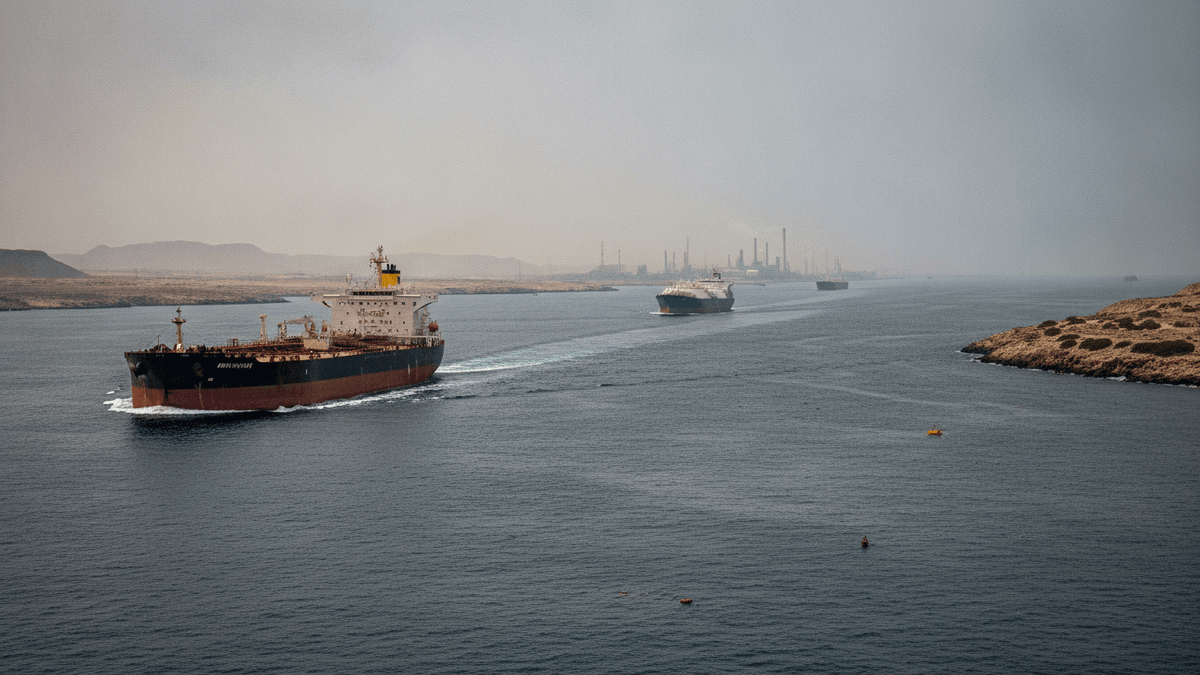
Oil tankers transiting a busy strait with industrial coastline
A potential peace agreement between the United States and Iran, aimed at reopening the vital Strait of Hormuz, could represent a significant turning point for global energy markets, extending beyond a mere short-term energy shock.
While an immediate easing of tensions and potential relief in energy supply are anticipated, the long-term implications of such a deal are contingent upon fundamental shifts in consumer and government behavior. These shifts would likely involve accelerated adoption of renewable energy sources and electric vehicles (EVs), potentially challenging the entrenched dominance of fossil fuels.
The strategic importance of the Strait of Hormuz, a critical chokepoint for global oil transit, means any disruption or resolution there has a pronounced impact on energy prices and supply security. However, the narrative evolving suggests that this event could catalyze a more profound transition, encouraging investment in sustainable energy infrastructure and technologies, thereby altering the landscape of fossil fuel dependency.
About the Author