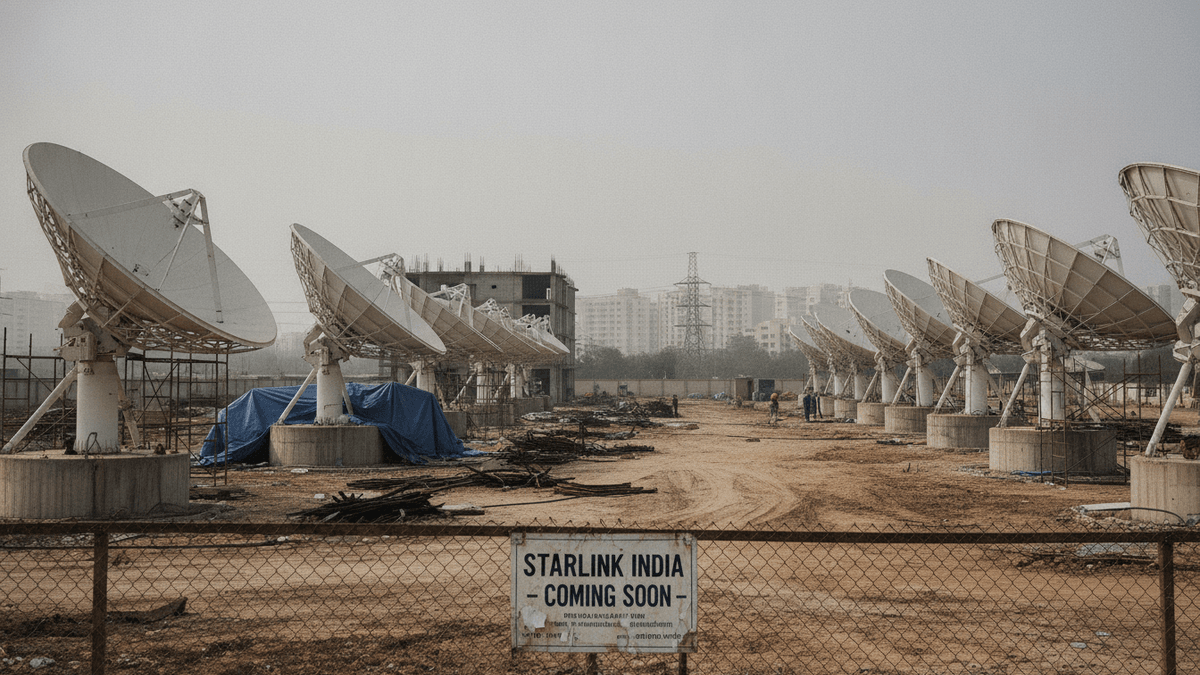
Starlink ground station under construction in India
The Indian government has reportedly withheld final clearances for Elon Musk-led satellite communication operator Starlink, citing national security concerns. The Ministry of Home Affairs (MHA) has effectively frozen approvals following reports that Starlink terminals were utilized in Iran, despite not holding a license to operate in the country. This development has heightened concerns among officials regarding the control of a US-based operator during geopolitical tensions.
Sources indicate that Indian authorities have requested clarification from Starlink on its compliance with local security mandates, particularly concerning potential conflicting demands from foreign governments during sensitive times. Starlink is reportedly continuing its engagement with Indian authorities, submitting affidavits affirming its adherence to local data-storage requirements. Senior company executives have also held meetings with government officials to resolve the impasse, but the MHA remains hesitant to grant approvals until security issues are addressed.
The increased scrutiny extends to other players in the satellite communication sector, with joint ventures involving local telecom giants Airtel and Reliance Jio also undergoing review. However, arrangements involving domestic players are considered less problematic by the government.
This situation has also stalled the Department of Telecommunications’ (DoT) plans to finalize pricing for satcom spectrum, with the framework awaiting Union Cabinet approval.
The delay comes at a critical juncture for Starlink’s parent company, SpaceX, which is preparing for a potential Nasdaq listing. The ongoing regulatory hurdles in India could potentially impact investor sentiment ahead of the IPO.
Starlink had previously secured a Global Mobile Personal Communication by Satellite (GMPCS) license from the DoT and authorization from the Indian National Space Promotion and Authorisation Centre (IN-SPACe) for commercial operations in India. The company had planned to establish 20 earth stations across Noida, Chennai, and Navi Mumbai, with an estimated capacity to serve up to 2 million users in India. The user terminal was expected to cost around ₹33,000.
About the Author