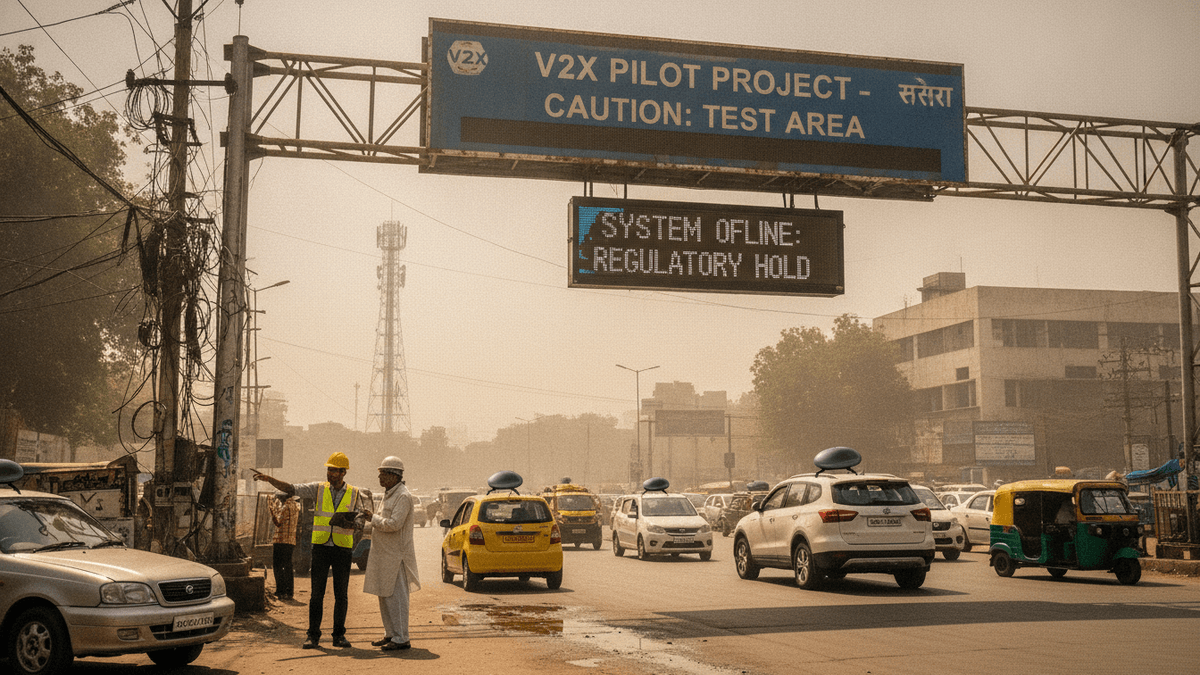
V2X pilot project sign displaying "SYSTEM OFFLINE: REGULATORY HOLD" over a dusty Indian road.
New Delhi, India – A critical initiative to enhance road safety in India through Vehicle-to-Everything (V2X) technology is encountering substantial roadblocks, stemming from a contentious dispute among telecom operators, technology firms, and automotive industry bodies. This clash over control, licensing, and spectrum allocation threatens to derail the deployment of life-saving technology aimed at curbing road fatalities.
The ambitious V2X deployment, designed to enable vehicles to communicate with each other and their surroundings, is currently in limbo as key stakeholders remain divided. The core of the disagreement lies in who should manage and regulate this nascent road safety ecosystem. Telecom operators are reportedly pushing for control over spectrum and licensing, while auto manufacturers and tech companies emphasize the need for a framework that prioritizes vehicle safety and seamless integration.
Sources close to the matter indicate that disagreements over mandatory testing protocols and the allocation of specific radio frequencies are exacerbating the delay. These technical and regulatory hurdles are not only hindering progress but also raising concerns about the potential impact on investment in this crucial sector. The prolonged stalemate could deter private investment and venture capital interest in Indian automotive and telecommunications technology companies focused on advanced driver-assistance systems (ADAS) and connected car solutions.
The V2X technology promises to significantly reduce road accidents by providing real-time alerts to drivers about potential hazards, such as sudden braking, pedestrians, or road infrastructure issues. However, the current turf war is casting a shadow over its timely implementation, leaving the nation’s road safety goals in jeopardy. The resolution of this dispute is crucial for attracting the necessary capital and fostering innovation in India’s automotive and technology sectors.
About the Author