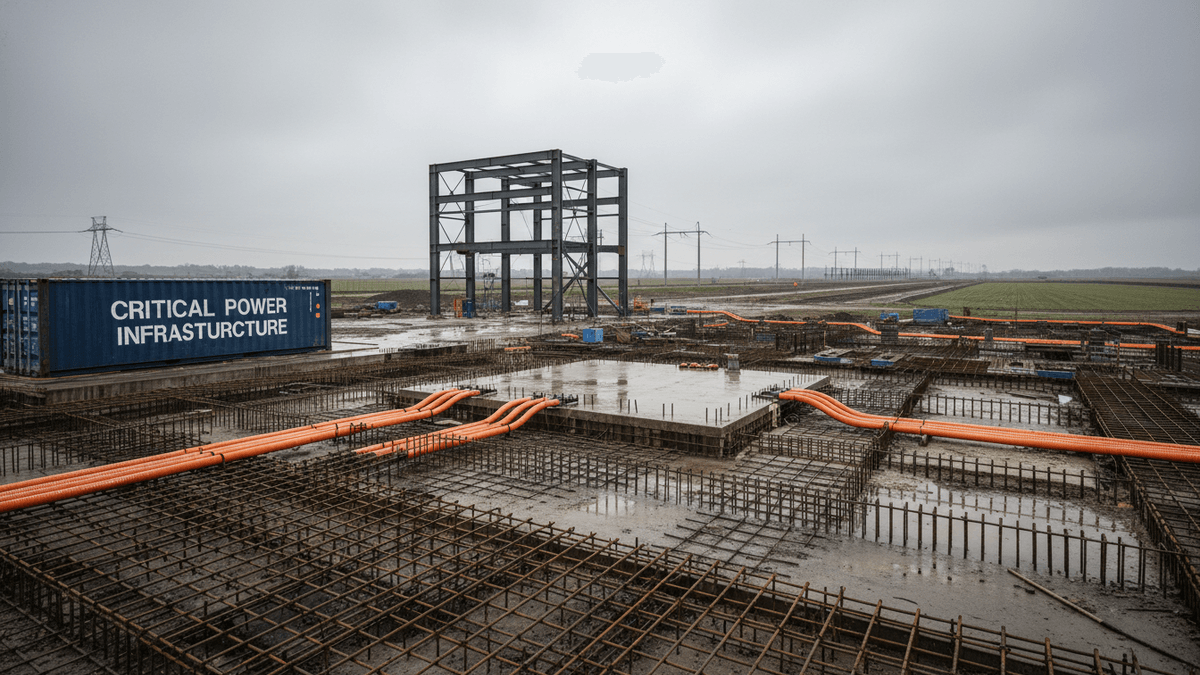
Industrial construction site, orange conduits emerging from concrete, steel frame, overcast day.
Tata Steel’s ambitious project to establish low-carbon steel production in the UK is encountering significant timeline setbacks, with delays expected to last between six to eight months. The primary obstacle is the challenge in securing the necessary electricity access for the new electric arc furnace, a critical component of the plant’s transition to more sustainable operations.
This delay could impact the broader strategy of decarbonization within the steel industry, an area attracting increasing attention from investors focused on environmental, social, and governance (ESG) criteria. While the specific investment figures for the UK project have not been detailed in this context, such large-scale industrial transformations typically involve substantial capital expenditure, often supported by private equity or strategic corporate investment.
The reliance on stable and sufficient electricity access highlights a growing infrastructure challenge for heavy industries transitioning to greener technologies. Electric arc furnaces, while significantly reducing carbon emissions compared to traditional blast furnaces, are highly energy-intensive. The ability to secure affordable and reliable power is therefore paramount for the financial viability and operational success of these new facilities.
This situation underscores the complexities faced by major industrial players in navigating the energy transition. Delays in critical infrastructure, such as electricity grid connections, can have ripple effects on investment timelines and project economics, potentially deterring future capital deployment if not adequately addressed by policymakers and utility providers.
About the Author