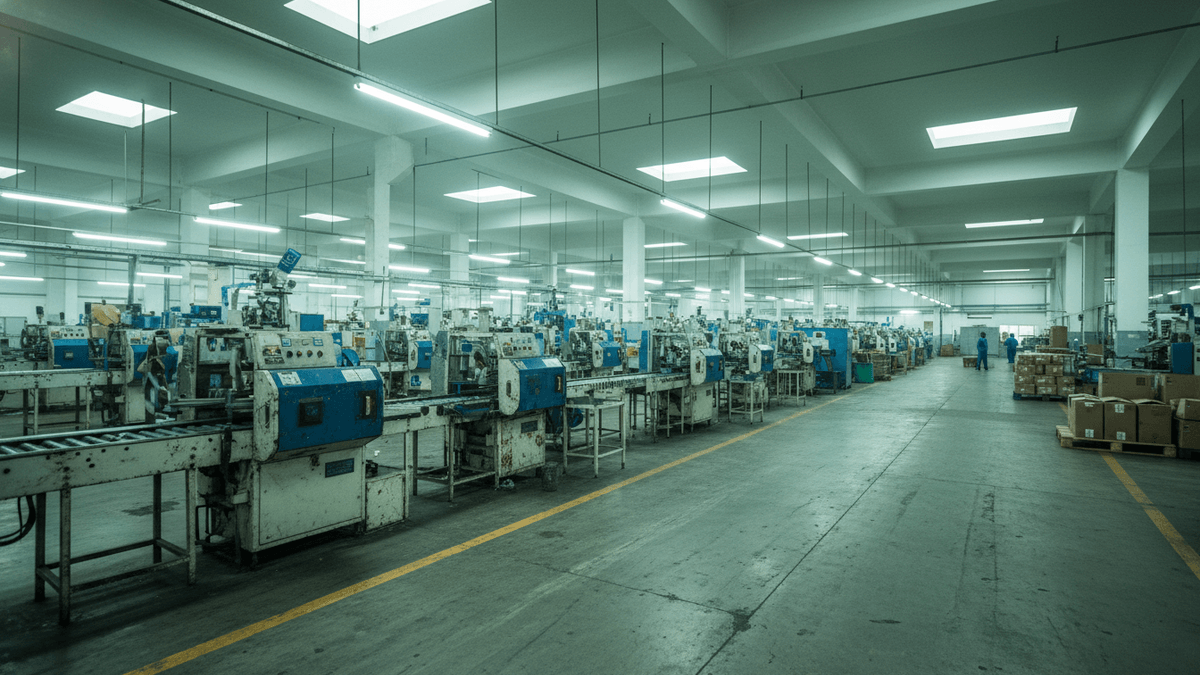
Long rows of inactive machinery in a large, brightly lit industrial production hall
Hindustan Unilever (HUL) has reported a significant reduction in its permanent employee count, cutting its workforce by 8.6% in the fiscal year 2026. This move reflects the consumer goods giant’s strategic response to prevailing market conditions, including sluggish demand and a broader push for enhanced productivity.
The company’s latest figures indicate a decline not only in permanent positions but also among its broader worker base, suggesting a comprehensive effort to streamline operations. While specific figures on the exact number of employees affected were not detailed, the percentage decrease points to a notable adjustment in HUL’s human capital strategy.
This workforce adjustment comes at a time when many consumer goods companies are navigating a challenging economic landscape. Factors such as shifting consumer spending patterns and inflationary pressures have contributed to slower sales growth, prompting businesses to re-evaluate their operational efficiencies and cost structures. For HUL, the decision to reduce headcount appears to be a direct measure aimed at improving productivity and aligning its operational capacity with current market realities.
The impact of such workforce changes can be multifaceted, potentially affecting employee morale and operational capacity in the short term, while aiming for long-term efficiency gains. As HUL continues to adapt to market dynamics, its strategic decisions regarding workforce management will be closely watched by industry observers and investors alike.
About the Author