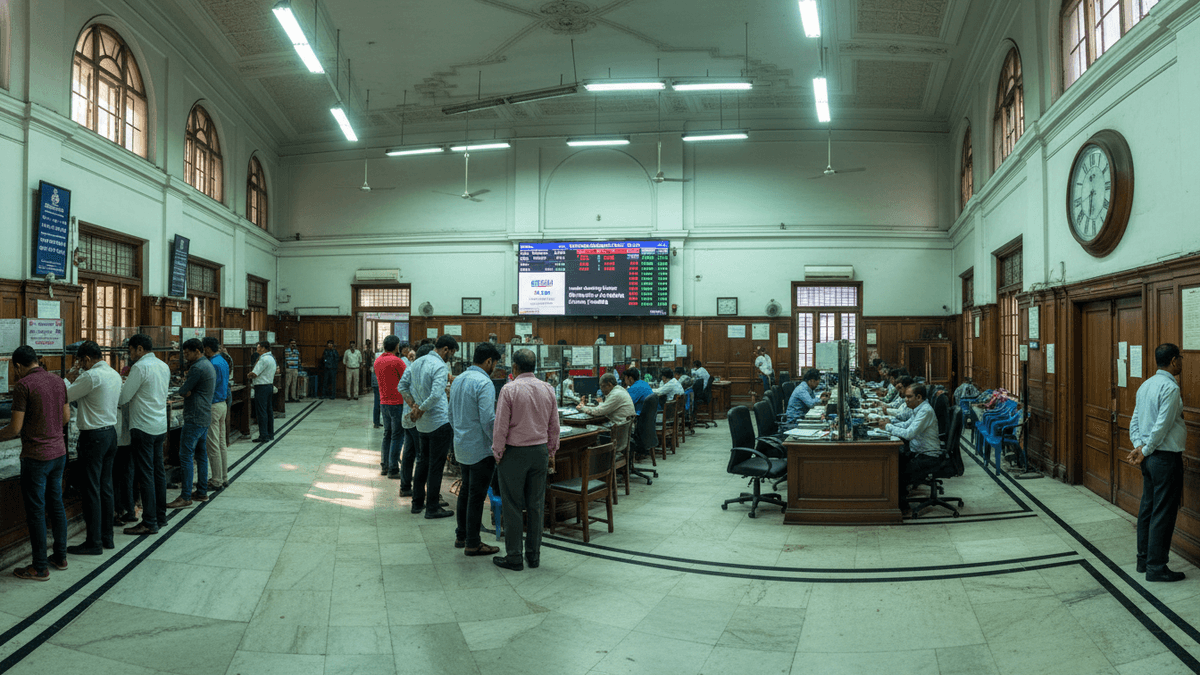
Customers and employees in a historic Indian bank hall with a stock ticker display.
Indian banks are expected to experience a marginal decline in their profitability this fiscal year, primarily driven by a reduction in treasury gains and the anticipation of early provisioning for a new accounting rule. Despite these factors, the overall profitability is projected to remain robust, significantly exceeding historical averages.
The analysis by Crisil indicates that while return on assets may see a slight decrease, the core financial health of the banking sector remains strong. Net interest margins (NIMs) are anticipated to hold steady, suggesting that the primary lending and borrowing activities will continue to generate stable income.
Furthermore, Crisil forecasts continued healthy credit growth, a key indicator of economic activity and a driver of banking sector expansion. This sustained credit expansion is expected to counterbalance some of the pressures arising from lower treasury income and new provisioning requirements.
The anticipated dip in profitability is largely attributed to two main factors: lower gains from the banks’ investment portfolios (treasury income) and the need to make early provisions in anticipation of a new accounting standard, likely related to Expected Credit Loss (ECL) provisioning. These provisions, while impacting short-term profitability, are generally seen as a move towards more prudent financial reporting and risk management.
Despite the projected easing in profitability metrics, the sector’s performance is expected to remain well above its long-term historical benchmarks, underscoring the resilience and improved financial footing of Indian banks in recent years.
About the Author