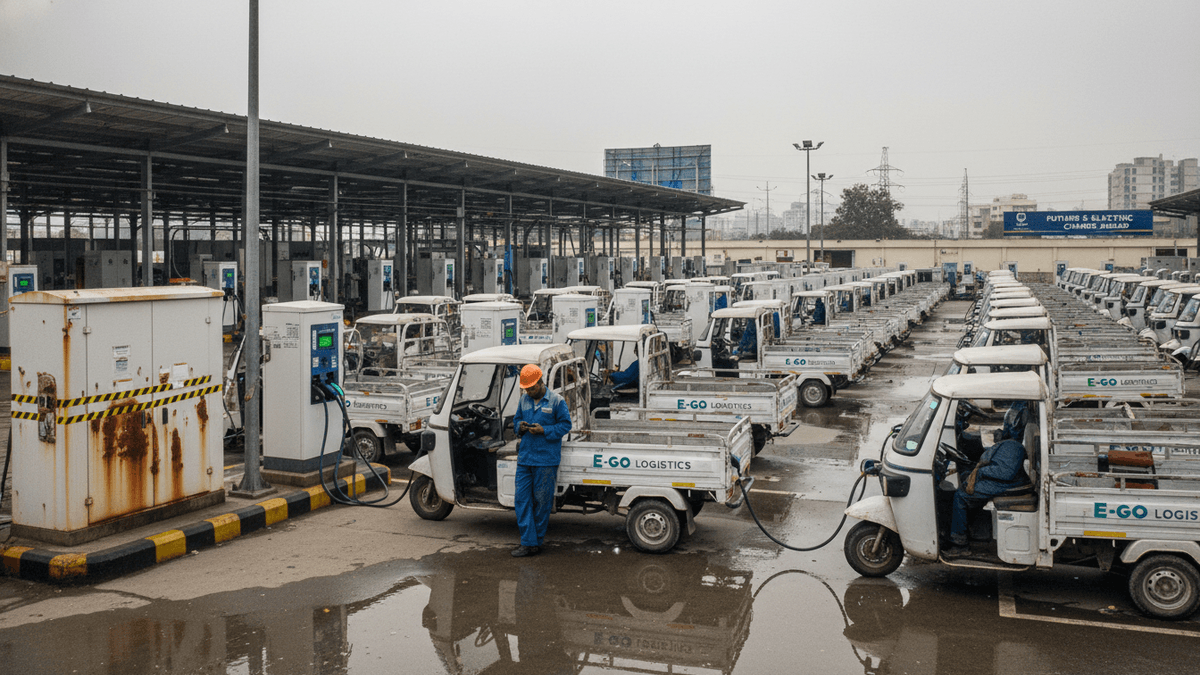
Electric three-wheeler cargo vehicles charging at a logistics hub in New Delhi.
New Delhi, India – Indian businesses are accelerating their transition to electric vehicles (EVs) as a strategic response to volatile fossil fuel prices and escalating geopolitical tensions in West Asia. This shift is primarily motivated by the pursuit of stable and predictable operational costs, a crucial factor for fleet operators and logistics companies navigating an uncertain global economic landscape.
The surge in crude oil prices, exacerbated by instability in key oil-producing regions, has made traditional fuel-based transportation increasingly expensive and unreliable. Consequently, businesses are actively seeking alternatives that offer long-term cost savings and greater control over expenditures. The adoption of EVs, supported by government policies and the availability of local EV solutions, is emerging as a viable strategy to mitigate these economic pressures.
Fleet operators, in particular, are recognizing the economic advantages of transitioning to electric fleets. While initial investment costs for EVs can be higher, the significantly lower running costs, reduced maintenance, and potential government incentives are proving to be compelling factors. This trend underscores a broader movement within the Indian corporate sector towards sustainable and cost-efficient operational models, signaling a robust future for EV adoption in the country.
About the Author