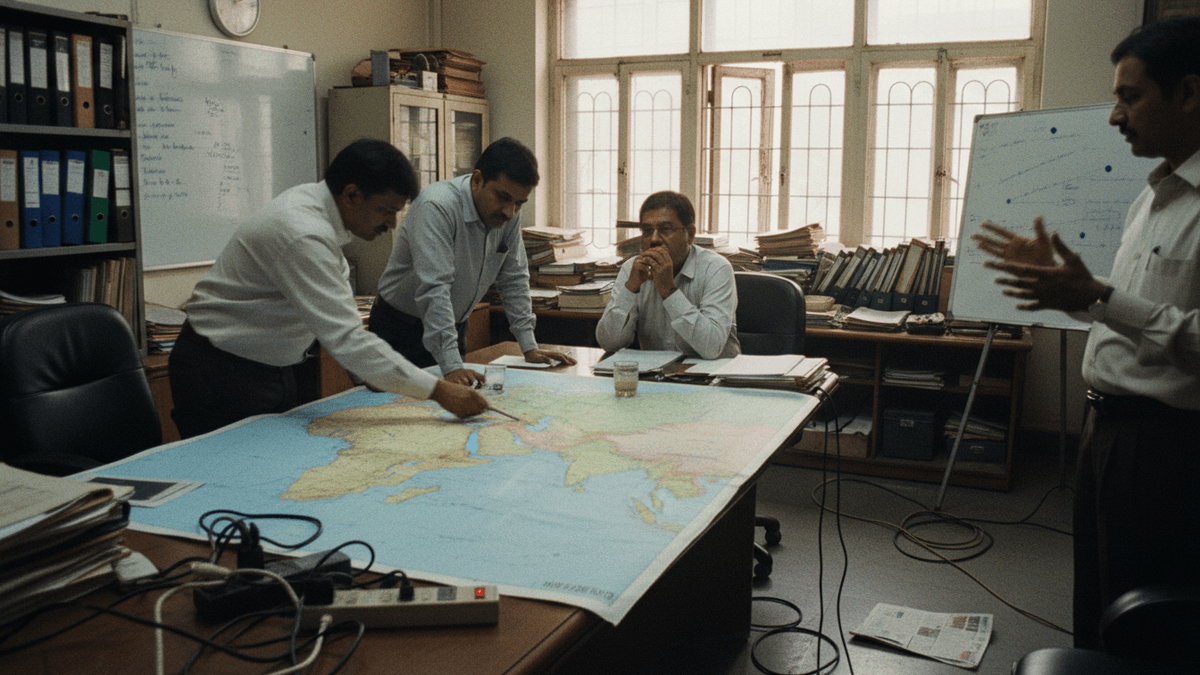
Indian officials discuss oil transit routes in a cluttered office, amidst global energy uncertainty.
India is considering the negotiation of oil corridors supported by Iran as the prospect of a full recovery of shipping levels through the Strait of Hormuz remains uncertain, according to a report by Moody’s. This strategic shift signals a move towards direct energy supply negotiations by nations facing prolonged disruptions in key transit routes.
The analysis suggests that a complete return to pre-conflict shipping volumes via the Strait of Hormuz is unlikely before 2026. This projected delay indicates that improvements in energy transit will be gradual, slow, and subject to continued volatility. Consequently, global economies are expected to grapple with higher and unpredictable oil prices.
The potential exploration of Iran-backed corridors by India highlights a growing trend among nations to secure energy supplies through bilateral or multilateral agreements, bypassing traditional chokepoints that are vulnerable to geopolitical instability. This approach could reshape energy trade dynamics in the region.
The continued uncertainty surrounding the Strait of Hormuz, a critical artery for global oil and gas shipments, underscores the persistent risks in the energy market. Investors and policymakers will be closely monitoring developments as countries adapt their strategies to ensure energy security amidst these challenges.
About the Author