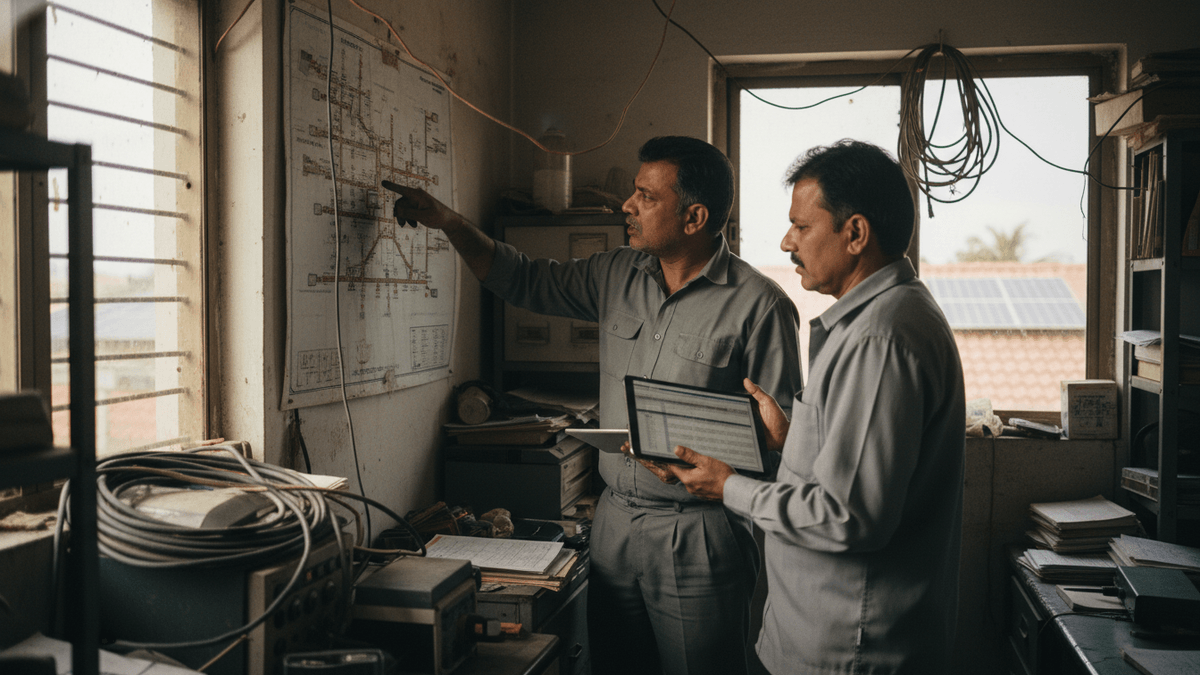
Two men in a cluttered office examine a technical diagram, discussing electricity plans.
New proposals from the Central Electricity Authority could lead to an increase in household electricity bills in India, even for consumers using less power. This potential tariff hike is driven by the need for power distribution companies (discoms) to recover costs amid a challenging market environment.
The discoms are facing reduced revenue streams due to the increasing adoption of rooftop solar power and the rise of captive power generation. As more consumers generate their own electricity or purchase it from alternative sources, their reliance on traditional discoms diminishes, impacting the latter’s sales and profitability.
To address this financial strain, the Central Electricity Authority has suggested an increase in the fixed monthly charges levied on electricity consumers. Furthermore, the authority has also put forward the idea of implementing separate tariff structures for consumers who utilize solar power, aiming to create a more equitable cost-recovery mechanism.
This development comes in the wake of rising fuel prices, which have already put pressure on the energy sector. The proposed changes in electricity tariffs signal a broader effort to rebalance the economics of power distribution in India, ensuring the financial viability of discoms while navigating the transition towards renewable energy sources.
About the Author