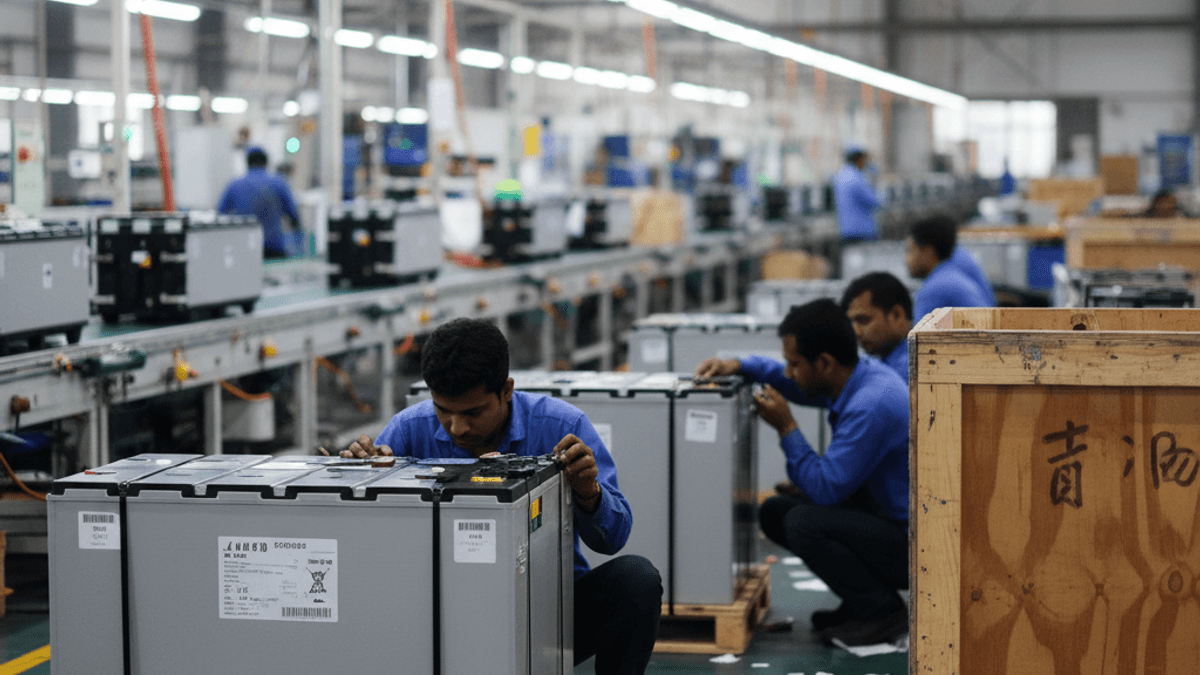
Indian workers assembling large battery modules in a brightly lit factory.
India’s burgeoning demand for batteries, crucial for its electric vehicle and renewable energy ambitions, is creating a significant energy security vulnerability, mirroring past challenges with technological outsourcing. The nation’s current dependence on imports, particularly from China, for both finished batteries and essential critical minerals, presents a substantial risk to its long-term energy independence.
This reliance on foreign supply chains, especially for key components like lithium-ion batteries and the raw materials they require, echoes previous instances where India outsourced critical technological manufacturing, leading to sustained dependencies. The current situation highlights a potential trap where rapid growth in energy storage could inadvertently build a new foundation of external reliance.
To mitigate this emerging threat, strategic shifts towards robust local manufacturing are paramount. This includes fostering the development of diverse battery chemistries suited to India’s specific needs and investing in the exploration and processing of indigenous raw materials. Such initiatives are vital not only for bolstering energy security but also for ensuring future resilience in a rapidly evolving global energy landscape.
About the Author