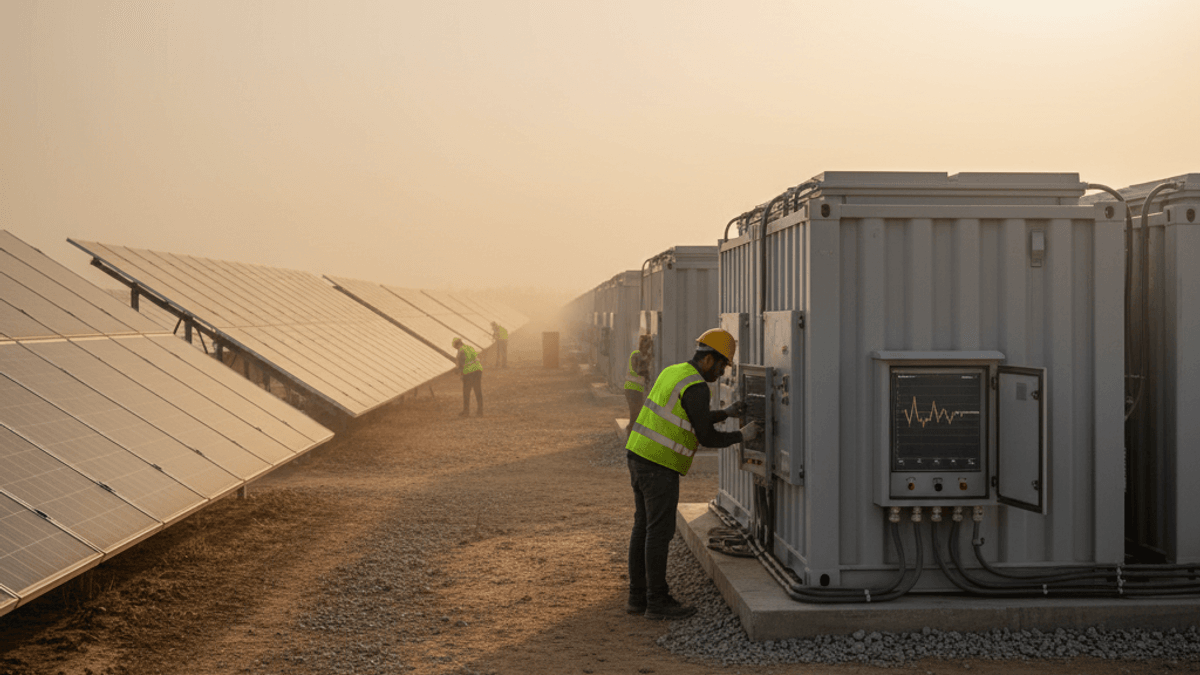
Engineer adjusts controls at a solar farm battery storage unit amidst a dusty haze.
India’s rapidly expanding renewable energy sector is encountering a significant hurdle: a bottleneck in the national power grid that is forcing major players like ReNew Energy Global Plc to curtail solar power generation. This situation directly impacts the company’s earnings and highlights the infrastructure challenges accompanying India’s ambitious green energy targets.
The inability of the existing power grid infrastructure to absorb the increasing volume of solar energy produced, particularly during peak generation times, has led to instances where ReNew Energy must deliberately reduce its output. This curtailment means that otherwise available clean energy is being wasted, directly affecting the revenue streams and profitability of the company.
In response to these operational challenges, ReNew Energy is reportedly investing in battery storage solutions. The aim is to create a more flexible system that can store excess solar power when generation is high and grid capacity is limited, and then discharge it when demand is strong or grid constraints ease. This strategy is crucial for balancing supply and demand and mitigating the financial impact of curtailment.
Adding to the pressure, ReNew Energy, like many global companies, is contending with rising costs influenced by geopolitical events and supply chain disruptions. These increased operational expenses, coupled with the revenue loss from power curtailment, present a complex financial landscape for the company.
Looking ahead, ReNew Energy is expected to place a greater strategic focus on solar power projects, underscoring the long-term commitment to the sector despite current infrastructural challenges. The company’s ability to navigate these grid limitations and manage rising costs will be critical for its sustained growth and profitability in the Indian renewable energy market.
About the Author