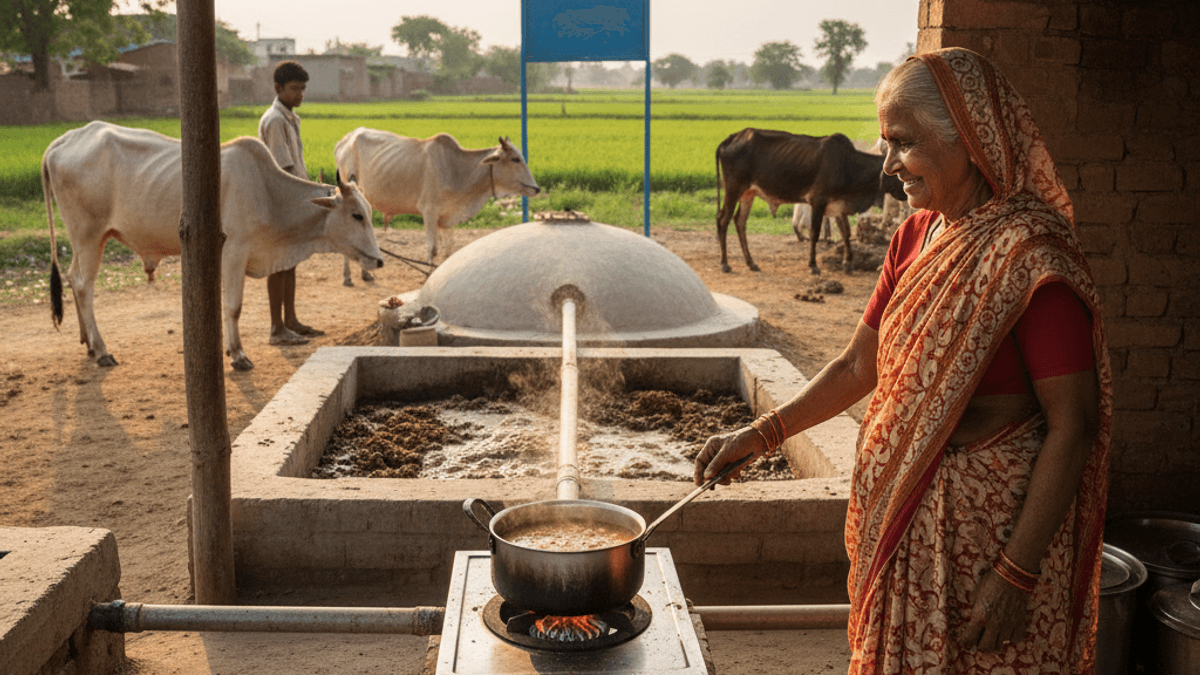
Woman cooks with biogas from a rural digester, cows graze nearby in Uttar Pradesh, India.
In the face of global energy market volatility and domestic cooking gas shortages, rural India is increasingly turning to an unexpected, yet abundant, resource: cow dung. In villages across Uttar Pradesh, the traditional fuel source is being transformed into biogas, offering a reliable and sustainable alternative for household energy needs.
This homegrown innovation addresses critical energy access issues, particularly for communities affected by global supply chain disruptions and rising fossil fuel prices. The process involves converting cow dung into biogas, a renewable energy source that can power kitchens, thereby reducing reliance on imported fuels. Beyond energy, the byproduct of this process serves as a valuable organic fertilizer, enhancing agricultural productivity and contributing to soil health.
The Indian government has recognized the strategic importance of biogas production, aligning it with national objectives for achieving carbon neutrality and promoting rural self-sufficiency. Support for biogas initiatives aims to foster a decentralized energy model, empowering local communities and reducing the environmental footprint associated with conventional energy sources. This shift highlights a significant trend in sustainable energy solutions emerging from the Global South, driven by local ingenuity and supportive policy frameworks.
About the Author