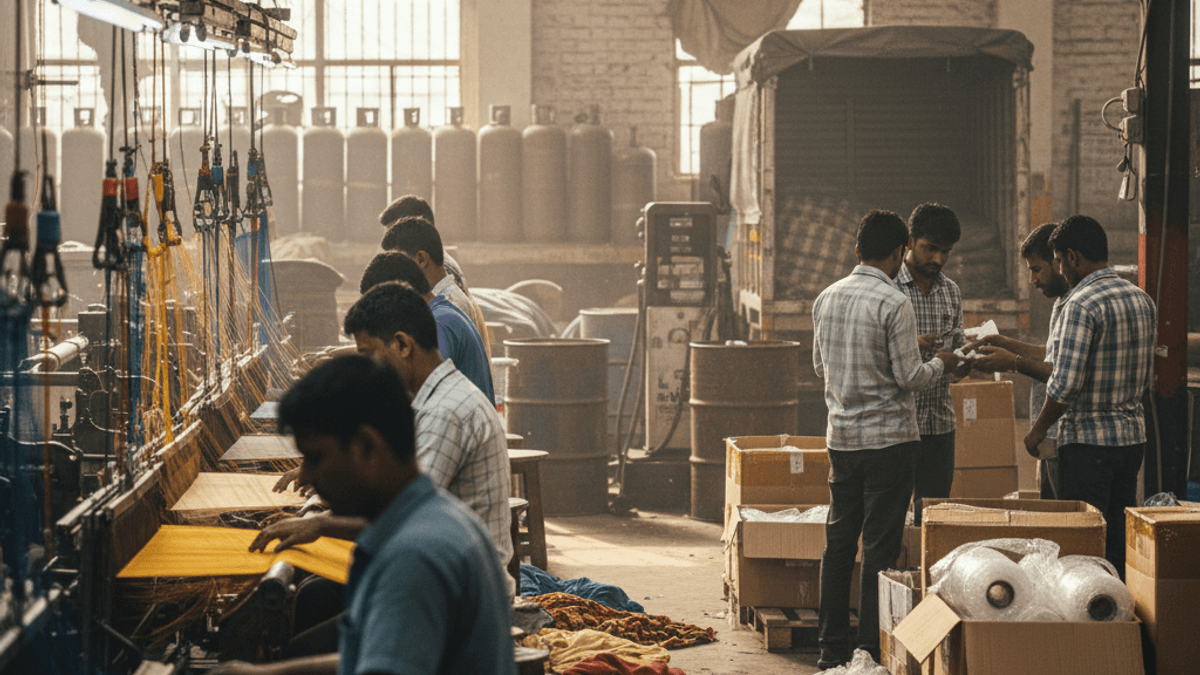
Workers in an Indian textile factory amidst production and material handling.
India’s burgeoning Direct-to-Consumer (D2C) sector is encountering its most formidable challenges yet, as a confluence of global and domestic factors strains manufacturing facilities and alters long-standing supplier relationships. Rising commodity prices, exacerbated by geopolitical events and supply chain disruptions, are leading to increased operational costs for manufacturers, which are increasingly being passed on to D2C brands.
Key manufacturing hubs across India, including Gujarat’s Morbi and Surat, and Ferozabad in Uttar Pradesh, are experiencing the impact of worker shortages and increased commodity prices. The surge in commercial LPG cylinder prices, coupled with fluctuations in petrol and diesel rates, has significantly driven up production expenses. This has also affected packaging costs, a critical component for D2C brands in sectors like beauty and personal care, apparel, and home decor.
Manufacturers are reporting a 15-20% increase in overall costs due to these interconnected issues. This has led to a renegotiation of terms between brands and their manufacturing partners. Many manufacturers are now requesting a ‘cash and carry’ model or partial upfront payments, moving away from the previous 45-60 day credit lines. This shift poses a significant challenge for D2C brands operating on thin margins, impacting their cash flow and working capital management.
The procurement of raw materials has become a primary concern, with shortages and price volatility amplified by the depreciation of the Indian Rupee against the US dollar and rising global oil prices. This makes imports of essential product ingredients, particularly for beauty and personal care brands sourcing from Europe and the Middle East, considerably more expensive. Freight costs have also seen a substantial increase, further adding to the financial strain.
Labor costs have also risen by approximately 15%, driven by factors such as protests over wages and working conditions, and an ongoing exodus of workers due to the increasing cost of living. This has led to production halts and increased expenses for manufacturers.
In response, D2C brands are exploring various strategies to mitigate these impacts. These include locking in raw material volumes when prices are lower, placing smaller orders during price hikes, optimizing by seeking alternative ingredients, and slashing budgets in non-essential departments like marketing. Some brands are also subtly increasing prices through hidden markups or by reducing discounts, aiming to absorb some of the cost pressure without alarming consumers.
While businesses are attempting to absorb these rising costs, the long-term sustainability of this approach is questionable. As commodity prices, particularly for gas and petroleum byproducts, rarely return to previous levels, it is anticipated that D2C brands will eventually need to pass on these increased costs to consumers, potentially impacting consumption patterns if not managed strategically.
About the Author