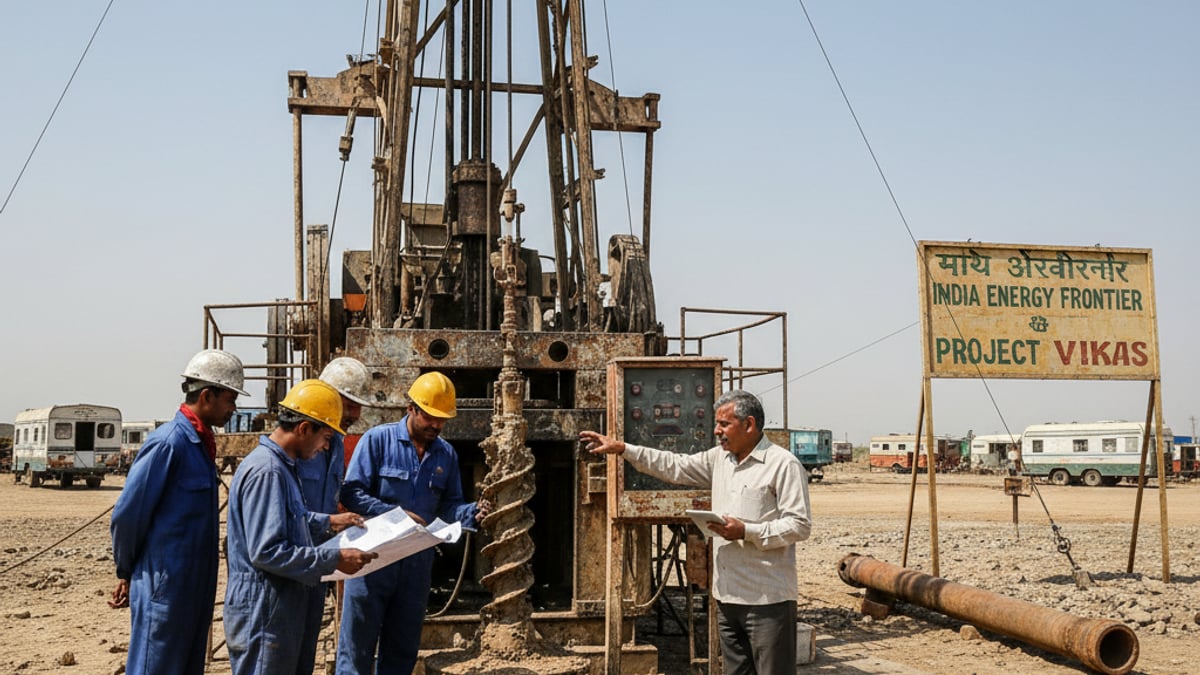
Indian oil field workers and a supervisor discuss plans at a drilling site under the "Project Vikas" sign.
India’s extensive efforts to bolster domestic oil and gas production through policy initiatives over the past ten years have yielded negligible results, prompting a critical review of both policy design and execution. The government has awarded 172 exploration blocks, attracting significant investment, yet only one marginal field has reported any meaningful output.
This outcome starkly contrasts with the ambitious goals of reducing import dependence, a key driver of the policy. Experts are questioning the efficacy of the current approach, citing geological complexities and the substantial risk transferred to private companies as deterrents to global investment. While the government continues to hold auctions, the participation and success have largely been dominated by state-run enterprises, underscoring a persistent reliance on imports for energy needs.
The situation highlights a critical gap between policy intent and on-ground performance in India’s energy sector, signaling ongoing challenges in achieving energy self-sufficiency through domestic exploration and production.
About the Author