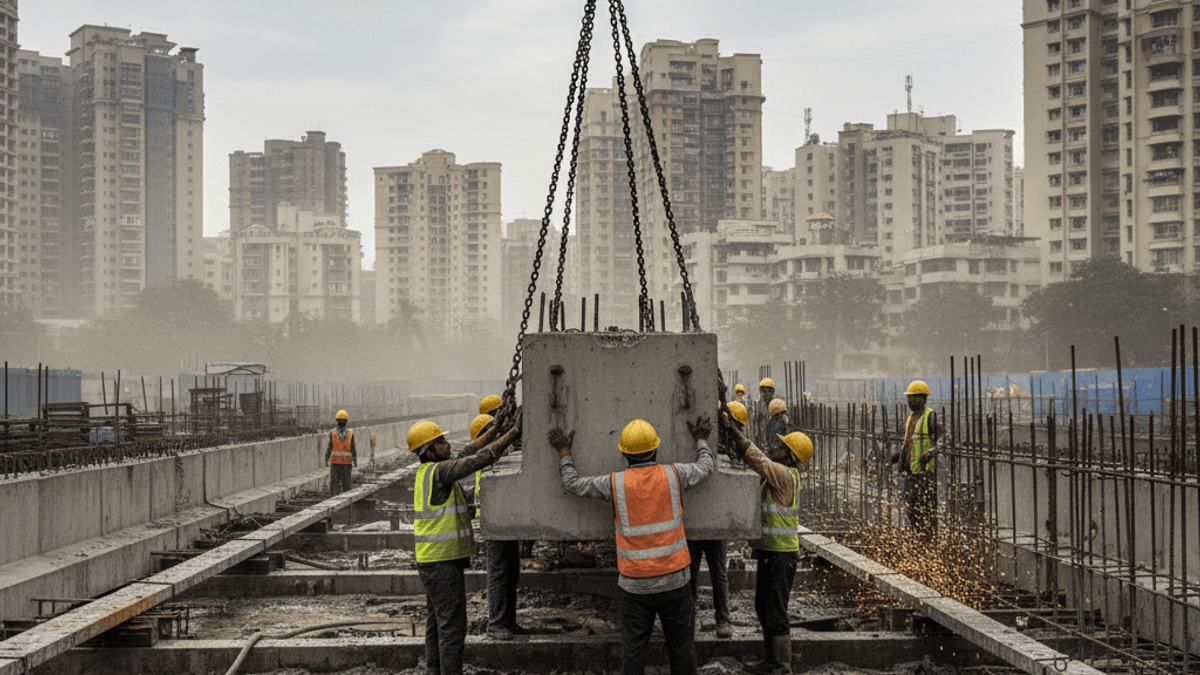
Construction workers guide a massive concrete slab into place on Mumbai's new metro line.
Mumbai, India’s undisputed financial capital, is currently experiencing its most significant infrastructure development phase in decades. With an investment exceeding $60 billion earmarked for the 2020s, the city is poised for a substantial transformation. This ambitious push encompasses a wide array of projects, including the expansion of its metro network, the construction of new expressways, the development of a much-anticipated new airport, and enhancements to regional connectivity.
The scale of investment signals a strategic intent to bolster Mumbai’s capacity to handle its growing economic demands and improve urban mobility. The metro network expansion aims to provide a more sustainable and efficient public transport system, alleviating the chronic congestion that plagues the city. Concurrently, new expressways are designed to streamline logistics and improve connectivity between key business districts and residential areas, as well as with the hinterland.
The development of a new international airport is crucial for enhancing Mumbai’s status as a global gateway and supporting its role in international trade and tourism. Furthermore, regional connectivity projects are expected to integrate Mumbai more closely with its surrounding economic corridors, fostering broader regional development and economic activity.
While the potential benefits of this infrastructure boom are immense, questions remain about the efficacy and impact of such large-scale investments. The success of these projects will depend on efficient execution, effective management of resources, and the ability of the infrastructure to meet the long-term needs of a dynamic and rapidly growing metropolis. This decade could indeed be pivotal in defining Mumbai’s future as a leading global financial center, provided these initiatives are realized effectively.
About the Author