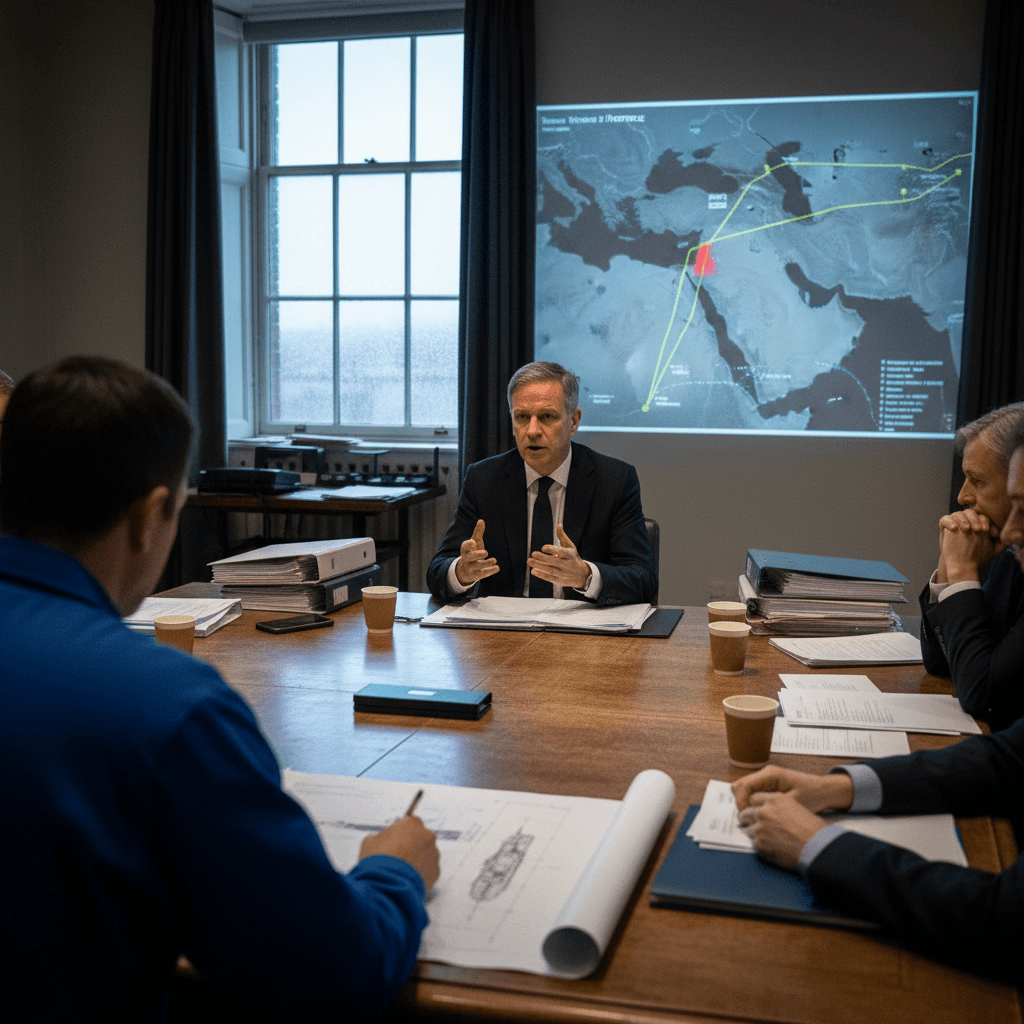
Keir Starmer addresses officials regarding the Strait of Hormuz.
Amidst rising tensions in the Middle East, British Prime Minister Keir Starmer has clarified the UK’s stance on the Strait of Hormuz, a critical chokepoint for global oil supplies. Starmer stated unequivocally that the UK would not support a blockade of the strait, emphasizing the need to avoid escalating conflicts and prioritizing the reopening of the waterway.
The Strait of Hormuz is strategically vital, serving as the primary transit route for oil exports from several major producers, including Saudi Arabia, Iran, the UAE, and Kuwait. Any disruption to traffic through the strait can have immediate and significant impacts on global energy markets, affecting prices and supply chains.
Starmer’s statement underscores a divergence in approach from some allies who may favor a more assertive stance. Instead, the UK’s strategy focuses on diplomatic efforts to de-escalate tensions and ensure the safe passage of vessels through the strait. This position reflects concerns about the potential economic fallout from a prolonged disruption and the desire to avoid being drawn into a larger conflict with Iran.
The UK’s commitment to reopening the Strait of Hormuz signals a priority on stability and the free flow of commerce, which are critical for maintaining economic confidence in the region. This decision will likely influence the UK’s engagement with other nations in addressing maritime security challenges and fostering cooperation to prevent further escalation.
About the Author