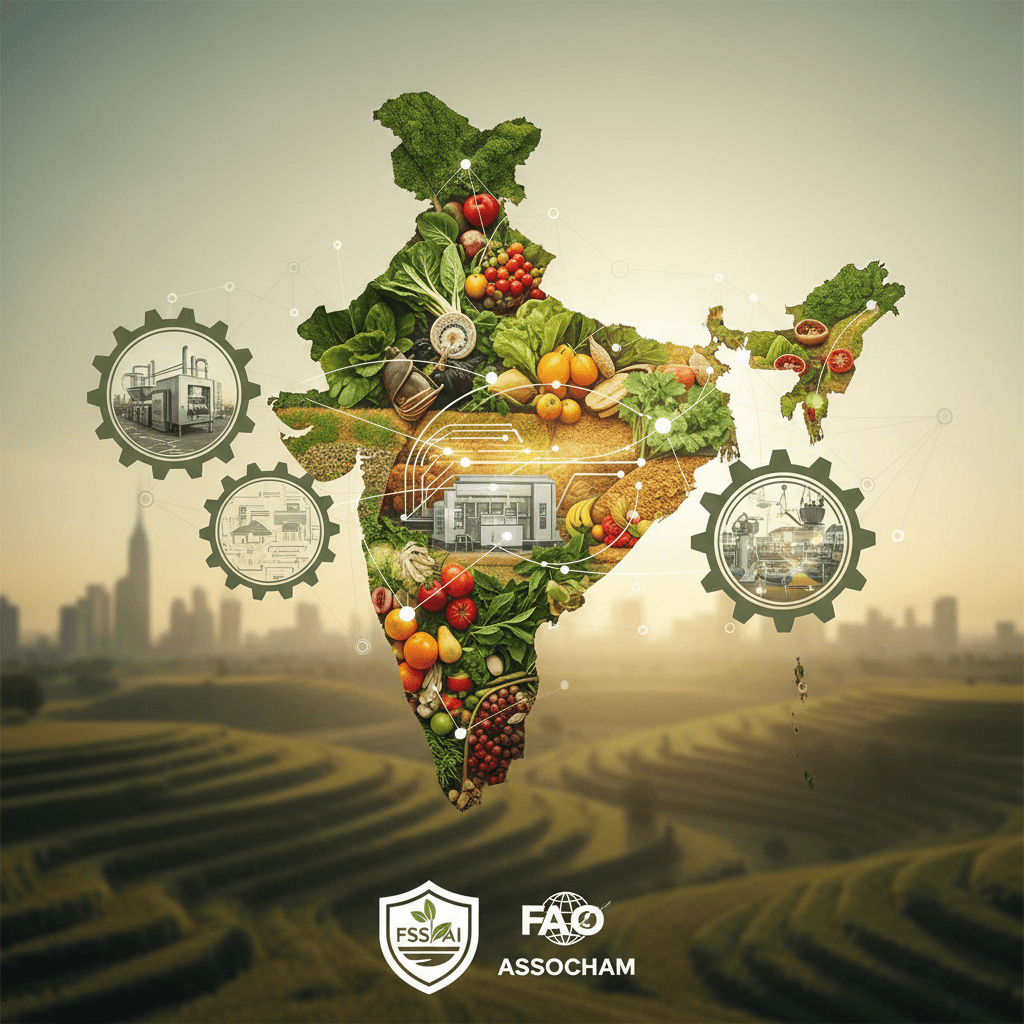
India's food policy shift for nutrition security and investment.
India is strategically shifting its food policy from calorie sufficiency to comprehensive nutrition security, a move highlighted at the NutriBharat 2026 conference on March 17, 2026. This transition aims to position India as a ‘global food basket’ by 2047, enhancing the role of the food processing sector. The policy shift is expected to drive investment and innovation in high-quality, micronutrient-rich foods, creating opportunities for private equity and venture capital in the sector.
A joint EY-ASSOCHAM paper, ‘NutriBharat@2047,’ advocates for a ‘nutrition for all’ approach, outlining a roadmap for India to become a global food hub through innovation and science-based regulations. The paper emphasizes the need for stringent global quality standards to enhance international trade and attract foreign investment into the Indian food processing industry. This initiative aligns with the Viksit Bharat 2047 vision, which aims to improve nutritional outcomes across the nation.
The focus on nutraceuticals, leveraging traditional knowledge like Ayurveda, presents another avenue for investment. India’s rich agricultural base and traditional systems are being integrated with modern food science to develop globally competitive products. The Food Safety and Standards Authority of India (FSSAI) is developing regulatory frameworks for functional foods, aiming to boost consumer trust and ensure product safety, thereby facilitating further investment in the sector.
Digital traceability and collaborative innovation, involving organizations like the FAO, are critical components of this policy. These measures aim to enhance the reliability and nutritional value of food products, attracting investment from both domestic and international players. The emphasis on agri-value addition, transforming raw agricultural produce into high-value exports, supports the ‘Make in India’ initiative and further stimulates investment in the food processing sector.
This policy shift addresses lifestyle-related diseases and enhances global competitiveness, making India an attractive destination for private equity and venture capital investments in the food and nutrition space. The focus on nutrition security, high-quality standards, and innovation is expected to drive significant growth and investment opportunities in the coming years.
About the Author