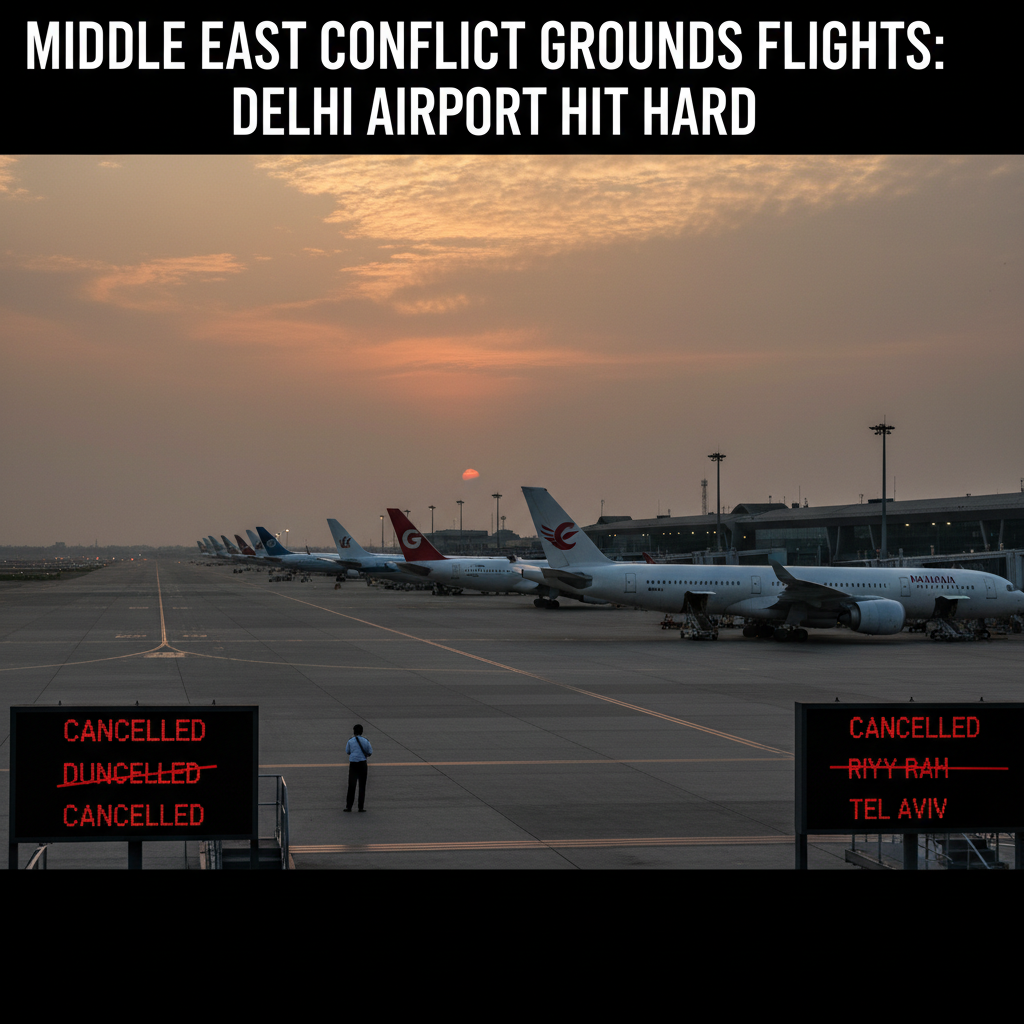
Middle East Conflict Grounds Flights: Delhi Airport Hit Hard
The escalating conflict in the Middle East has triggered a major operational crisis at Delhi airport, leading to the cancellation of 80 international flights on Tuesday. This disruption highlights the far-reaching consequences of geopolitical instability on the aviation sector, directly impacting travel and airline operations.
The Immediate Impact: Flight Cancellations and Stranded Travelers
The primary effect of the conflict has been the widespread cancellation of international flights. The chaos at Delhi airport underscores the vulnerability of global air travel to regional conflicts. Airlines were forced to adjust schedules and operations, leaving many travelers stranded and disrupting travel plans.
Airline Responses and Operational Adjustments
In response to the crisis, Emirates has initiated a limited return to service, attempting to mitigate the impact of the flight cancellations. Air India has also been actively involved, facilitating the repatriation of stranded travelers from Dubai. These efforts demonstrate the airlines’ commitment to managing the crisis and assisting affected passengers. The situation has necessitated quick decision-making and strategic adjustments to maintain some level of service.
The Broader Implications for Aviation
The flight cancellations at Delhi airport are a stark reminder of the interconnectedness of global events. The conflict’s impact extends beyond immediate flight disruptions, potentially influencing future travel patterns and airline strategies. The aviation industry faces ongoing challenges in adapting to geopolitical risks and ensuring passenger safety and operational continuity.
Key Entities Involved
- Emirates: Faced operational challenges and made a limited return to service.
- Air India: Played a critical role in repatriating stranded travelers from Dubai.
Where and When
- Where: Delhi airport, Middle East, Dubai
- When: Tuesday
Why This Matters
The cancellations are a direct consequence of the escalating conflict in the Middle East, highlighting the need for airlines and airports to develop robust contingency plans. This event serves as a crucial case study for the aviation sector in managing and responding to international crises.
Source: Industry-Economic Times
About the Author