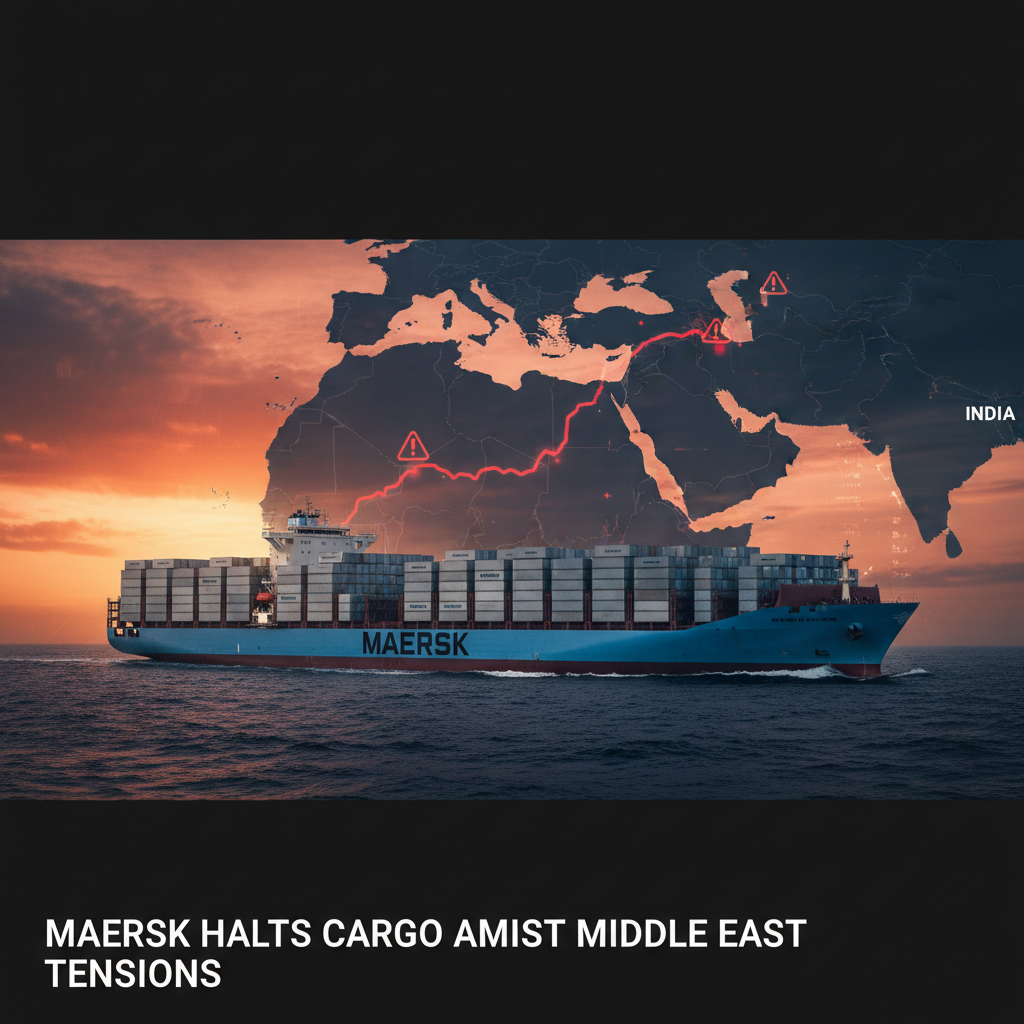
Maersk Halts Cargo Bookings Amid Middle East Tensions: Impact on India and the Gulf
The global shipping giant, Maersk, has made a significant move in response to the escalating tensions in the Middle East. According to a recent report by the Economic Times, Maersk has temporarily suspended select cargo bookings, creating ripples across the supply chain, particularly for those trading between India, its neighboring countries, and the Upper Gulf markets. This decision highlights the far-reaching consequences of geopolitical instability on international trade and logistics.
Suspension Details and Affected Regions
The suspension by Maersk affects multiple facets of cargo operations. The company has put a hold on accepting bookings for reefer and hazardous cargo in several Gulf states. Furthermore, the disruption extends to shipping routes connecting India with the Upper Gulf markets, impacting a crucial trade corridor. These measures, undertaken in light of recent developments in the region, underscore the vulnerability of global shipping to geopolitical events. The decision by Maersk serves as a clear indication of the challenges the shipping industry faces in navigating these uncertain times.
Air Cargo Operations Face Significant Challenges
Beyond the sea lanes, the impact is also felt in the air. Maersk‘s air cargo operations are experiencing significant challenges. This is primarily due to airspace restrictions and the subsequent flight cancellations. These disruptions add another layer of complexity for businesses relying on air freight for time-sensitive goods. The combined effect of these suspensions and restrictions presents a complex situation for businesses that rely on the affected shipping routes.
Key Affected Areas
- India: Shipping routes to and from India are significantly affected.
- Neighboring Countries: Regional trade is experiencing disruptions due to the booking suspensions.
- Upper Gulf Markets: Reduced cargo movement impacting trade in the region.
- West Asia: General impact on cargo movement in the region.
Why the Suspension? The Middle East Tensions
The primary driver behind Maersk‘s decision is the ongoing instability in the Middle East. The suspension of cargo bookings is a direct response to the recent developments, which have made it increasingly difficult and risky to maintain normal shipping operations in the region. The decision to suspend bookings reflects a proactive approach by Maersk to protect its operations and cargo, while also prioritizing the safety of its personnel.
Broader Implications and Industry Watch
This move by Maersk should be seen as a warning sign. It underscores the sensitivity of global supply chains to geopolitical events. The suspension will undoubtedly impact businesses that rely on these routes for importing and exporting goods. The situation warrants close monitoring, as further escalation of tensions could lead to more widespread disruptions and higher shipping costs. The industry and its stakeholders will be closely watching how these events unfold, which will likely impact strategies and operational decisions.
The situation serves as a critical reminder of the interconnectedness of the global economy and the importance of adapting to changing circumstances. As the situation evolves, businesses will need to be agile and proactive in mitigating the potential impacts on their operations. It’s a clear demonstration of how quickly the landscape can change and the importance of being prepared for unforeseen challenges.
Source: Economic Times
About the Author