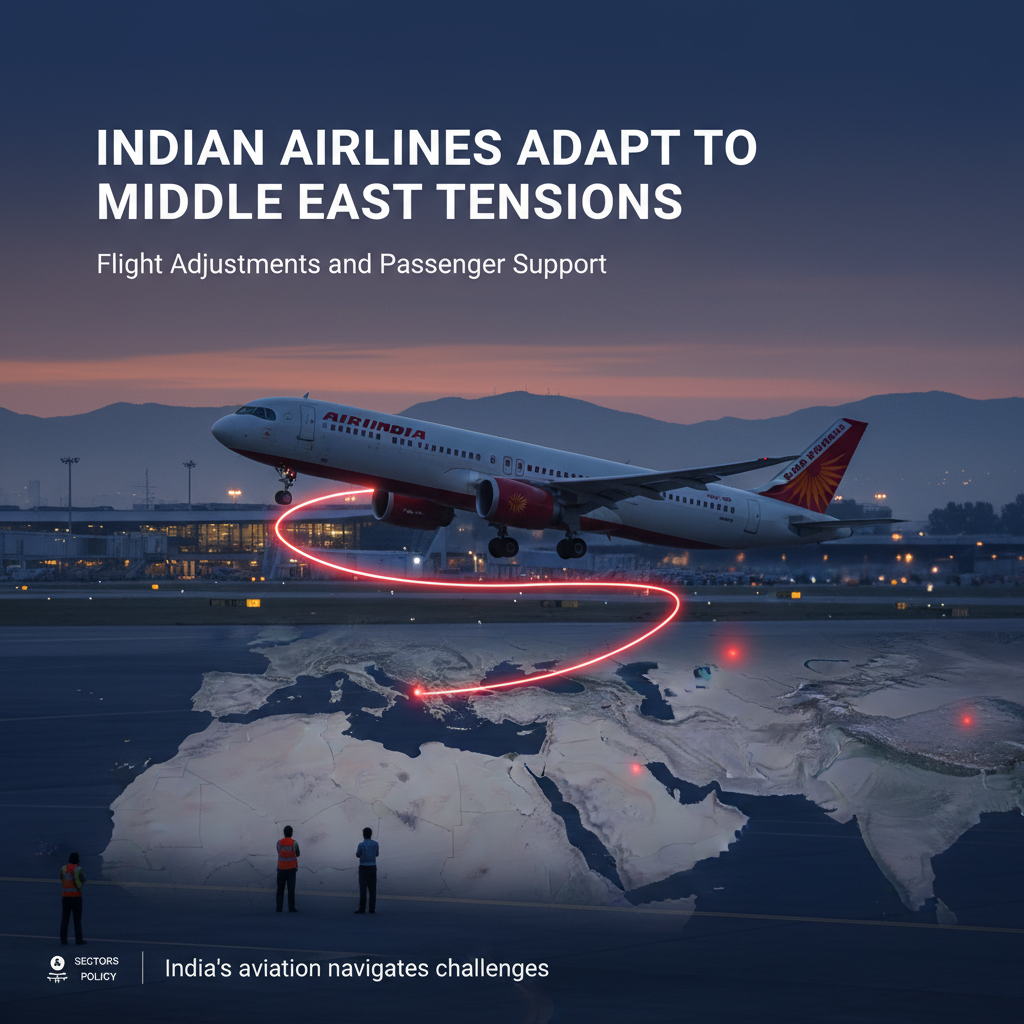
Indian Airlines Adjust Operations Amidst Middle East Tensions, Offering Relief Flights and Route Adjustments
The aviation sector in India is currently navigating a period of significant operational challenges. The ongoing tensions in the Middle East have necessitated swift and decisive action from Indian airlines, impacting flight schedules and passenger services. As reported by the Economic Times, airlines are adjusting their strategies to ensure passenger safety and operational continuity.
Operational Adjustments and Strategic Responses
The primary concern for Indian airlines, including Air India Express, IndiGo, Air India, and SpiceJet, is managing the impact on air travel. To this end, they are employing several key strategies. One of the most immediate responses involves adjusting flight schedules. For instance, plans were in place for 58 flights to operate on March 4, demonstrating the industry’s agility in adapting to the situation. Furthermore, relief flights have been organized, particularly to Saudi Arabia and the UAE, to assist passengers stranded by the conflict. These special flights are crucial in repatriating individuals and mitigating the disruptions caused by the crisis.
Route adjustments are another critical aspect of the airlines’ strategy. Services to key destinations, such as Muscat, Jeddah, and Madinah, are gradually resuming. In addition, airlines are resuming long-haul flights, albeit via alternative routes. This proactive approach underscores the airlines’ commitment to maintaining connectivity while prioritizing safety.
Government Oversight and Passenger Support
The Government is closely monitoring the situation, as it plays a pivotal role in ensuring the safety of passengers and maintaining oversight of airfares. This proactive stance reflects the government’s commitment to protecting the interests of both travelers and the aviation industry. A key element of these efforts is transparent communication with passengers. Airlines are prioritizing clear communication regarding refunds and providing necessary assistance to those affected by cancellations or schedule changes.
The impact of the crisis is substantial, as evidenced by the cancellation of over 1,600 flights. This large-scale disruption highlights the economic and logistical challenges faced by the aviation sector. The situation underscores the need for airlines to not only adapt their operational strategies but also to manage passenger expectations and provide effective support during uncertain times.
Looking Ahead
The evolving situation in the Middle East requires ongoing vigilance and adaptability from Indian airlines and the government. As the situation develops, airlines will likely continue to refine their operational strategies, focusing on passenger safety, route optimization, and transparent communication. The industry’s ability to navigate these challenges will be crucial for maintaining both operational efficiency and passenger trust.
The information in this article is based on the report by the Economic Times, providing an overview of the measures taken by Indian airlines in response to the Middle East tensions. (Source: Industry-Economic Times)
About the Author