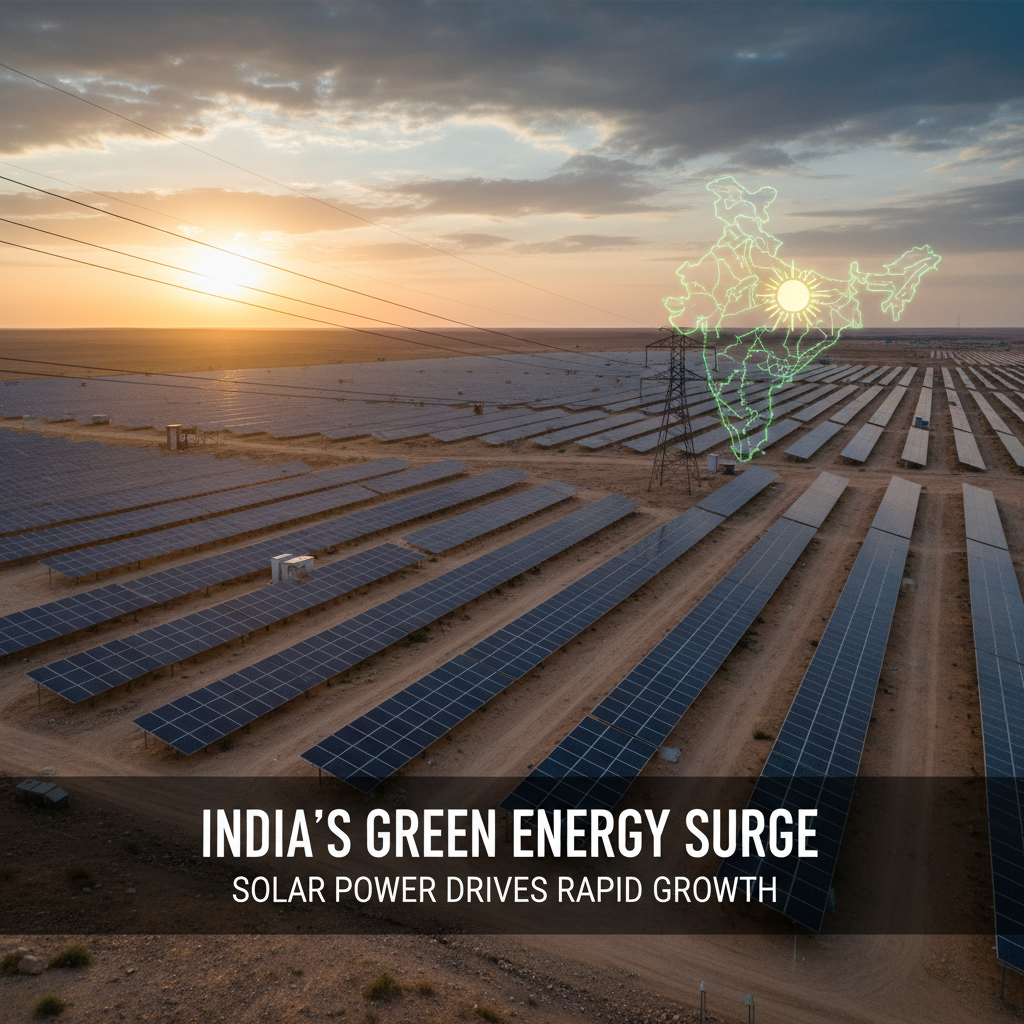
India’s Green Energy Surge: Solar Power Drives Rapid Growth
India is witnessing a remarkable surge in its renewable energy sector, with solar power leading the charge. This rapid expansion is not merely a trend, but a strategic move towards a sustainable future, driven by ambitious goals and robust planning. The nation is actively working towards its 500 GW renewable energy goal [Source: Economic Times], aiming to transform its energy landscape by 2030.
Solar Power: The Engine of Growth
The growth in India’s renewable energy sector is particularly pronounced in solar power. With approximately 35 GW of solar capacity added this fiscal year, the nation is demonstrating its commitment to clean energy. This impressive growth is fueled by several factors, including strategic grid planning and advancements in manufacturing. These developments are crucial in meeting the rising energy demand across the country and achieving ambitious decarbonization targets.
Grid Planning and Manufacturing Advancements
The government’s focus on robust grid planning is essential for integrating the increasing solar capacity. Simultaneously, advancements in manufacturing are providing the necessary infrastructure to support this growth. These initiatives ensure that the energy generated from solar sources is efficiently distributed and utilized throughout India. This integrated approach highlights India’s comprehensive strategy to enhance its green energy capabilities.
Meeting Energy Demand and Decarbonization Goals
The rapid expansion of renewable energy, especially solar power, plays a vital role in meeting India’s rising energy demand. As the nation’s economy grows, so does its need for power. By increasing its reliance on solar energy, India is not only addressing its energy needs but also making significant strides towards its decarbonization targets. This dual benefit underscores the importance of the ongoing energy transition.
Policy and Sectoral Impact
Government policies are instrumental in driving the growth of the renewable energy sector. These policies provide the framework and incentives necessary for expanding solar power capacity. Simultaneously, the sector is experiencing significant advancements. These factors collectively create a favorable environment for investment and innovation. This positive environment is essential for achieving long-term sustainability and energy independence.
Conclusion
India’s renewable energy sector is experiencing a period of rapid and dynamic growth, driven primarily by solar power. With strategic grid planning, manufacturing advancements, and supportive government policies, India is well-positioned to achieve its ambitious 500 GW renewable energy goal by 2030. This transformation is not only critical for meeting the nation’s rising energy demand but also for achieving its decarbonization targets, paving the way for a sustainable and prosperous future.
About the Author