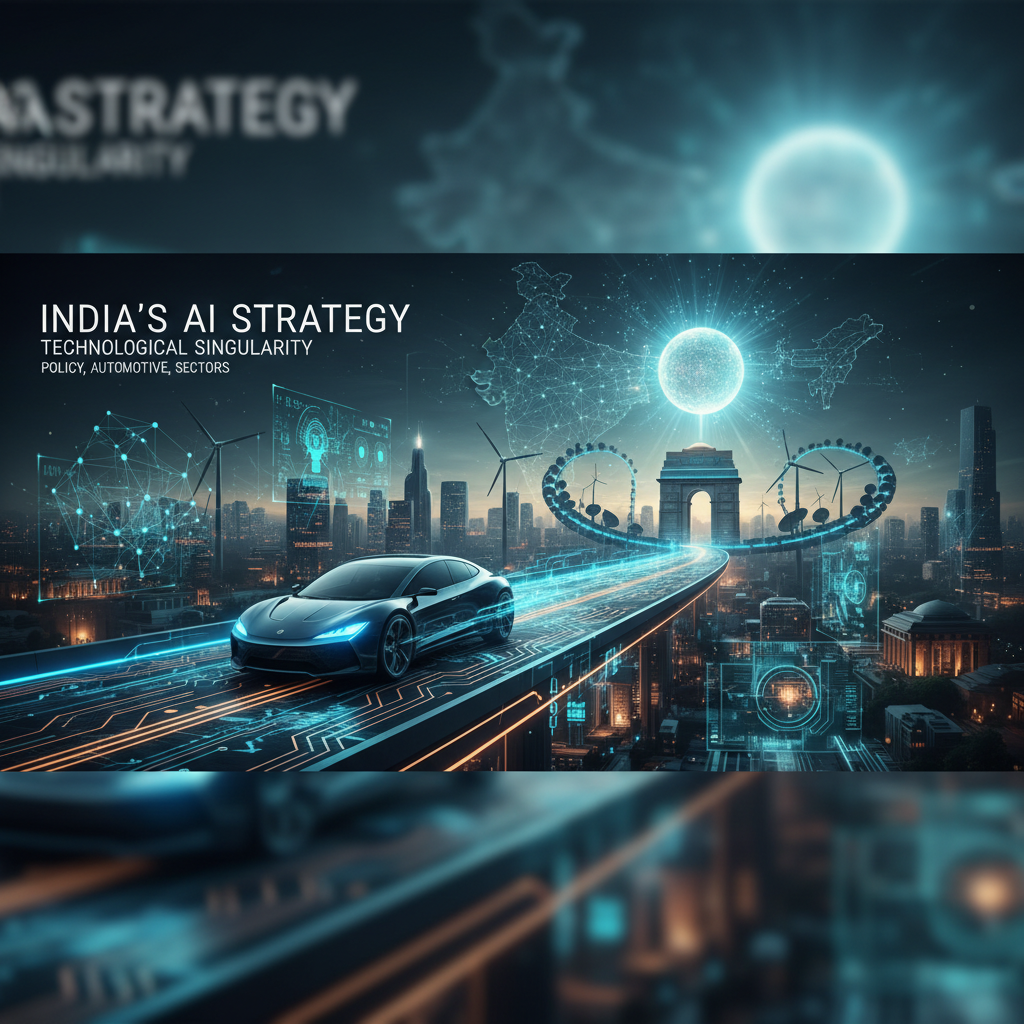
India’s AI Strategy: Preparing for Technological Singularity
India is on the cusp of a significant transformation, driven by an ambitious AI-first strategy that spans both industrial and social sectors. This proactive approach isn’t just about adopting new technologies; it’s a fundamental shift designed to enhance work quality and accelerate operational speeds across various domains. The focus is particularly sharp on sectors like automotive and electric vehicles (EVs), where AI is poised to revolutionize processes and outcomes. As reported by ETManufacturing.in, this strategic pivot is crucial for driving innovation and fostering robust economic growth.
The Core of India’s AI Strategy
At the heart of India’s AI strategy is a commitment to leveraging artificial intelligence to transform various sectors. The goal is clear: to significantly improve work quality and speed. This encompasses everything from automating routine tasks to optimizing complex processes, ultimately leading to greater efficiency and productivity. The government’s vision includes comprehensive policy frameworks that support AI development and deployment across key industries. This proactive stance is not merely about keeping pace with global trends; it is about establishing India as a leader in the AI landscape.
AI’s Impact on the Automotive and EV Sectors
The automotive and electric vehicle sectors are at the forefront of this AI revolution. These industries are experiencing rapid advancements, with AI playing a pivotal role in areas like autonomous driving, smart manufacturing, and enhanced vehicle performance. For example, AI algorithms can optimize supply chains, predict maintenance needs, and improve overall vehicle efficiency. In the EV sector, AI is crucial for battery management systems, charging infrastructure optimization, and the development of advanced driver-assistance systems (ADAS). The integration of AI in these sectors is not just an incremental improvement; it is a fundamental shift that will redefine how vehicles are designed, manufactured, and used.
Driving Innovation and Economic Growth
The strategic deployment of AI is expected to be a major catalyst for innovation and economic growth in India. By automating processes, improving efficiency, and enabling new technologies, AI has the potential to unlock significant economic value. This includes creating new jobs, attracting foreign investment, and fostering the development of a robust AI ecosystem. The government’s focus on AI is aligned with its broader economic goals, aiming to make India a global hub for technology and innovation. This strategic emphasis on AI is expected to significantly contribute to the nation’s economic progress.
Preparing for Technological Singularity
The concept of technological singularity, a hypothetical point in time when technological growth becomes uncontrollable and irreversible, is a crucial consideration in India’s AI strategy. This forward-thinking approach involves not only embracing AI but also anticipating its long-term implications. The government and industry stakeholders must proactively address ethical considerations, potential risks, and the societal impact of advanced AI systems. This includes developing robust regulatory frameworks, promoting AI literacy, and ensuring that the benefits of AI are broadly shared across society. Preparing for the singularity requires a comprehensive and adaptive strategy, ensuring that India is well-positioned to navigate the challenges and opportunities of an AI-driven future.
Policy and Sectoral Synergies
The success of India’s AI strategy hinges on strong policy support and effective collaboration across various sectors. The government is actively working on creating policies that foster innovation, protect data privacy, and promote responsible AI development. This includes initiatives to support AI research, provide funding for startups, and develop a skilled workforce. Furthermore, the automotive and EV sectors are actively collaborating with technology providers, research institutions, and government agencies to drive the implementation of AI solutions. This collaborative approach is essential for ensuring that AI is effectively integrated into the economy and society.
Conclusion
India’s AI strategy is a bold and ambitious undertaking, with the potential to transform industries, drive economic growth, and position the country as a global leader in technology. By embracing an AI-first approach, particularly in sectors like automotive and EVs, India is setting the stage for a future where innovation and efficiency are paramount. The journey towards technological singularity requires careful planning, robust policies, and a collaborative spirit, ensuring that India is well-prepared to navigate the complexities of an AI-driven world. The strategic investments in AI, coupled with a forward-thinking approach, underscore India’s commitment to shaping its future in the age of artificial intelligence.
About the Author