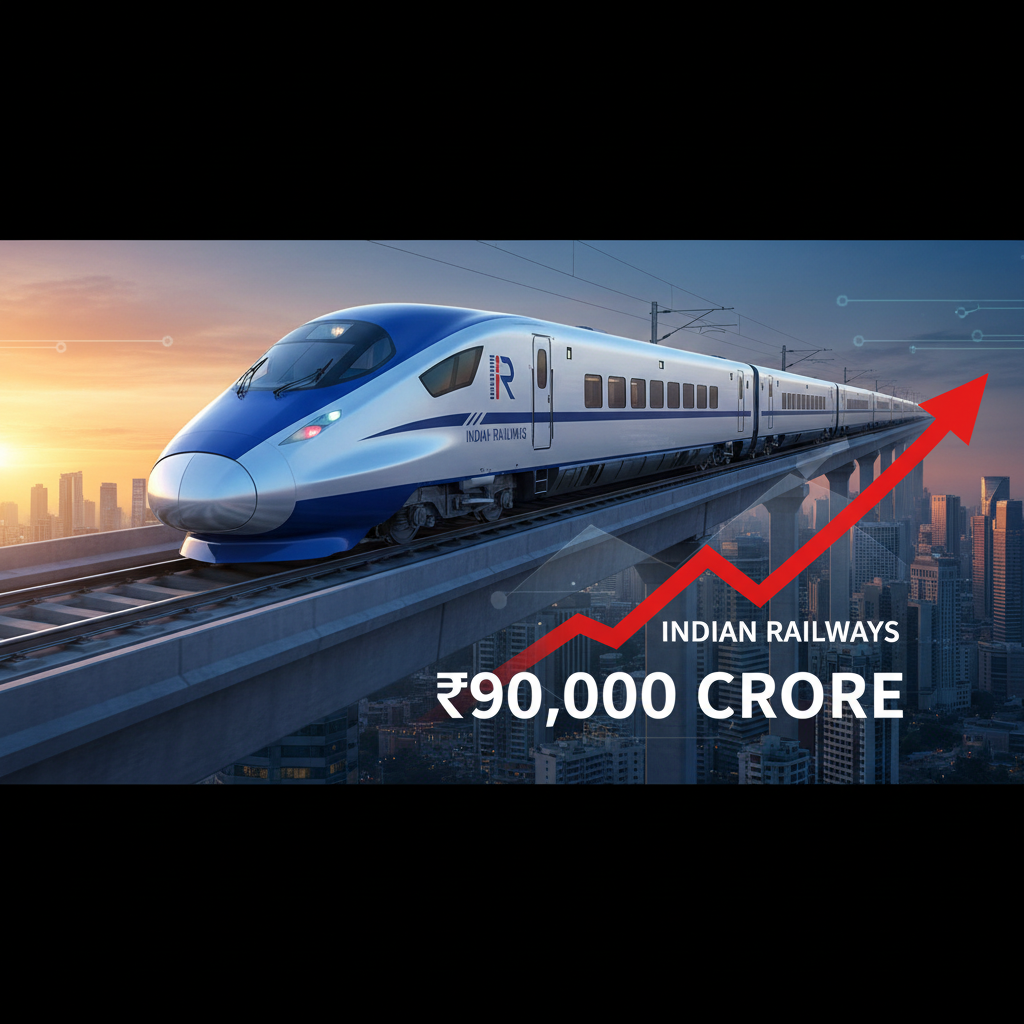
Indian Railways to Cover ₹90,000 Crore Bullet Train Cost Overrun
The ambitious Mumbai-Ahmedabad bullet train project is facing a significant financial challenge. According to a recent report from the Economic Times, the project is experiencing a substantial cost overrun, estimated to be around ₹90,000 crore. This increase in expenses is primarily attributed to delays in land acquisition, a critical aspect of infrastructure development. The Indian Railways will be absorbing this increased cost, utilizing government funds to ensure the project’s completion.
The Financial Burden and Government Response
The decision by the Indian Railways to cover the cost overrun underscores the government’s commitment to the bullet train project. The initial projections have been significantly impacted by various factors, with land acquisition emerging as a major contributor to the escalating costs. The government’s approach involves allocating funds directly to the project, thereby mitigating the need for additional loans from external sources. Specifically, no new loans from the Japan International Cooperation Agency or other institutions are planned.
Project Delays and Their Impact
Land acquisition has proven to be a complex and time-consuming process, leading to considerable delays. These delays not only push back the project’s timeline but also contribute to cost escalations. As construction timelines are extended, various expenses, including labor, materials, and administrative costs, tend to increase. The Mumbai-Ahmedabad bullet train project, designed to enhance connectivity between these two major cities, has become a symbol of India’s infrastructure ambitions. However, the current situation highlights the challenges inherent in large-scale infrastructure projects, where unforeseen issues can significantly impact financial and operational aspects.
Funding Strategy and Future Implications
The strategy of using government funds to cover the cost overrun reflects a strategic decision to maintain the project’s momentum. This approach avoids the complexities and potential delays associated with securing new loans. The government’s allocation of funds demonstrates its resolve to overcome the hurdles and ensure that the project progresses. This decision has implications for future infrastructure projects, signaling a willingness to provide financial support to critical initiatives. The success of the Mumbai-Ahmedabad bullet train project is crucial not only for improving transportation infrastructure but also for bolstering investor confidence in India’s infrastructure development capabilities.
The government is focused on implementing the project, which will improve the transportation between Mumbai and Ahmedabad. The Indian Railways is at the forefront, responsible for managing the financial and operational challenges. The project’s future will depend on how effectively these challenges are managed and the speed with which the remaining hurdles are overcome.
The situation concerning the Mumbai-Ahmedabad bullet train project underscores the importance of efficient project management and proactive risk mitigation in large-scale infrastructure endeavors. As the Indian Railways moves forward, it will be crucial to learn from the current challenges to improve future project planning and execution.
About the Author