US Imposes Steep Duties on Indian Solar Imports: A Blow to Renewable Energy?
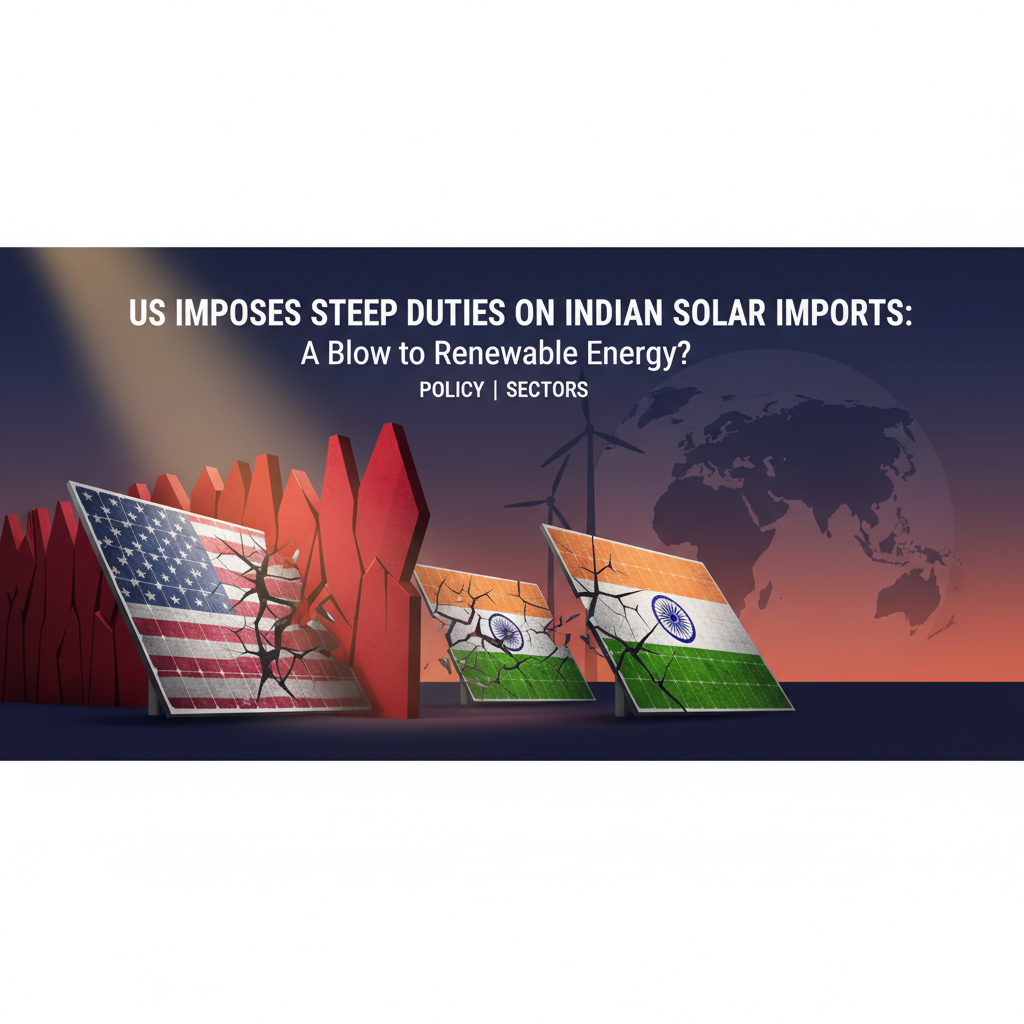
The renewable energy sector is experiencing significant shifts, and recent actions by the US Commerce Department are poised to reshape the landscape. In a move that has sent ripples through the industry, the department has imposed preliminary duties of 126% on solar imports originating from India. This decision, along with proposed duties on imports from Indonesia and Laos, is rooted in allegations of unfair manufacturing subsidies that have allegedly allowed exporters to gain an unfair advantage over US producers.
The Rationale Behind the Duties
The US Commerce Department‘s decision, announced recently, centers on the claim that Indian solar exporters, among others, have benefited from unfair subsidies. The department’s investigation concluded that these subsidies enabled exporters to undercut US producers, thereby distorting market dynamics and harming domestic businesses. The imposition of duties is a direct response to this perceived imbalance, aiming to level the playing field and protect the interests of US solar manufacturers. The Commerce Department also proposed duties ranging from 86% to 143% on Indonesia and 81% on Laos on similar grounds.
The US is taking this stance to safeguard its own industry. By imposing these tariffs, the US hopes to encourage domestic production and reduce reliance on foreign imports. The US is essentially trying to create a more competitive environment for its own solar manufacturers.
Impact on the Solar Energy Sector
The implications of these duties are far-reaching. For India, the 126% tariff on solar imports presents a significant challenge. This could lead to a decrease in solar import volumes from India, impacting the country’s export market and potentially slowing down its renewable energy projects. Indonesia and Laos also face similar hurdles with the proposed duties on their solar imports.
For the US, the immediate effect could be an increase in the cost of solar panel installation, which could affect the pace of solar project deployment. While the intention is to support domestic manufacturing, the higher costs might affect the price competitiveness of solar energy compared to other sources. This, in turn, could influence the broader adoption of renewable energy across the country. The US is betting that domestic producers can meet the demand, but there are risks involved.
Trade Policy and International Relations
These actions by the US Commerce Department have highlighted the complexities of trade policy and its impact on the renewable energy sector. The imposition of duties can strain international relations, particularly with countries like India, Indonesia, and Laos, who are key players in the solar imports market. The move underscores the ongoing debates about fair trade practices, the role of government subsidies, and the balance between protecting domestic industries and promoting global cooperation on climate change initiatives.
The US‘s actions are likely to be viewed by exporters as a protectionist measure. They might argue that the duties are designed to shield domestic manufacturers from international competition, rather than addressing legitimate trade concerns. This could lead to retaliatory measures or further disputes within the World Trade Organization (WTO).
Looking Ahead
The US Commerce Department‘s decision to impose duties on solar imports is a significant development in the world of renewable energy. It raises critical questions about the future of solar imports, trade policy, and international relations. The US‘s actions will be closely watched by industry stakeholders, policymakers, and international trade bodies. As the situation evolves, it will be essential to monitor the long-term effects on solar imports, the competitiveness of the US solar industry, and the broader goals of promoting renewable energy around the world.
When the US Commerce Department made this decision, it set in motion a series of potential consequences. Where the US‘s actions lead remains to be seen. Why the US has taken this step is clear: to protect its domestic solar industry. How this will play out for all parties involved is a question that only time will answer.
Source: Economic Times
About the Author