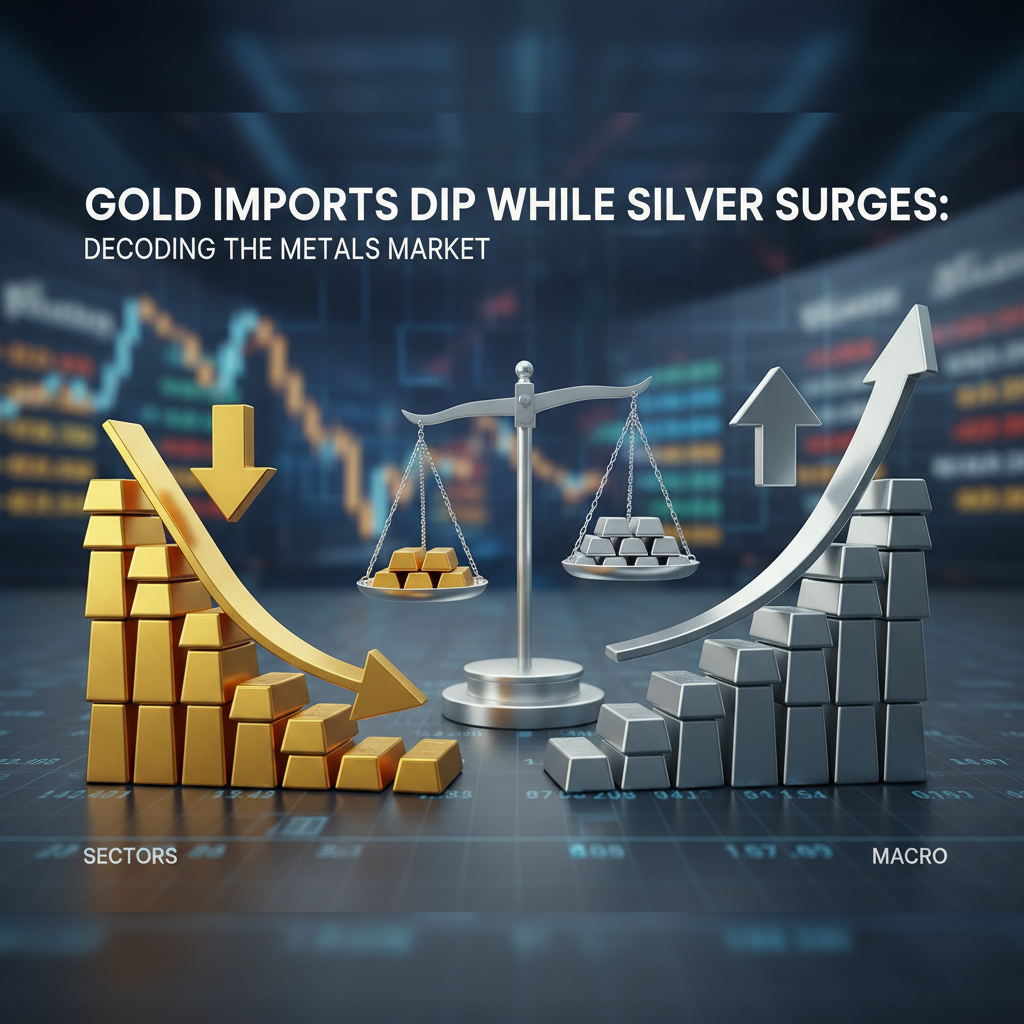
Gold Imports Dip While Silver Surges: Decoding the Metals Market
The precious metals market often presents a complex picture, with fluctuating prices and shifting demand. A recent report from the Economic Times highlights a particularly interesting dynamic: While gold imports have decreased, silver imports have experienced a significant surge. This shift offers valuable insights into current economic trends and consumer behavior in the commodities market. This analysis focuses on the period from April to December, providing a clear view of the changes.
Gold’s Price Surge and Import Volume Decline
During the period from April to December, the price of gold saw a substantial increase. The price rose by nearly 25% year-on-year, reaching $94,554 per kilogram. This significant price hike appears to have influenced consumer behavior, leading to more cautious buying patterns. As a direct result, the volume of gold imports experienced a decline. Import volumes fell by 18.3%, totaling 522 tonnes during the specified period.
Despite the decrease in import volume, the overall import bill for gold still rose. This is due to the higher prices. The total import bill increased by 1.8%, reaching $49.4 billion. This indicates that while consumers were purchasing less gold by volume, the higher per-unit cost resulted in a larger financial outlay overall.
Silver’s Rising Popularity
While the report does not provide the same level of detail on silver, the contrasting trend suggests a growing interest in silver. The surge in silver imports, which increased by 56%, could be attributed to several factors. These might include silver’s relative affordability compared to gold, its increasing use in industrial applications, or a shift in investor preference. Further analysis is needed to fully understand the drivers behind this surge, but the trend is clear: silver is gaining ground.
Impact on the Trade Gap
The dynamics of gold and silver imports have a direct impact on the trade gap. The trade gap is the difference between a country’s exports and its imports. Rising imports, especially when coupled with higher prices, can widen the trade gap. This is because more money is flowing out of the country to pay for these imports. Understanding these trends is crucial for policymakers and economists as they assess the overall health of the economy.
Market Analysis and Economic Trends
Analyzing the trends in gold and silver imports provides valuable insights into broader economic trends. Factors such as global economic conditions, inflation rates, and consumer confidence all play a role in influencing demand for precious metals. The contrasting trends observed in gold and silver imports may reflect shifts in investor sentiment, changes in industrial demand, or adjustments in consumer spending habits.
The fluctuations in gold prices and import volumes, and the surge in silver imports, highlight the dynamic nature of the commodities market. It underscores the importance of continuous monitoring and analysis to understand the forces shaping the market. Investors, industry analysts, and policymakers must stay informed of these trends to make informed decisions.
Conclusion
The period from April to December reveals a fascinating divergence in the precious metals market. While gold imports experienced a decline in volume due to rising prices, silver imports surged, potentially reflecting shifting consumer preferences and market dynamics. These trends have implications for the trade gap and offer insights into broader economic conditions. Continued monitoring of these trends is essential for anyone seeking to understand the complexities of the commodities market. As the market evolves, it will be interesting to see how these trends continue to develop and what impact they will have on the overall economy. This analysis provides a snapshot of the market, emphasizing the need for ongoing evaluation.
Source: Economic Times
About the Author