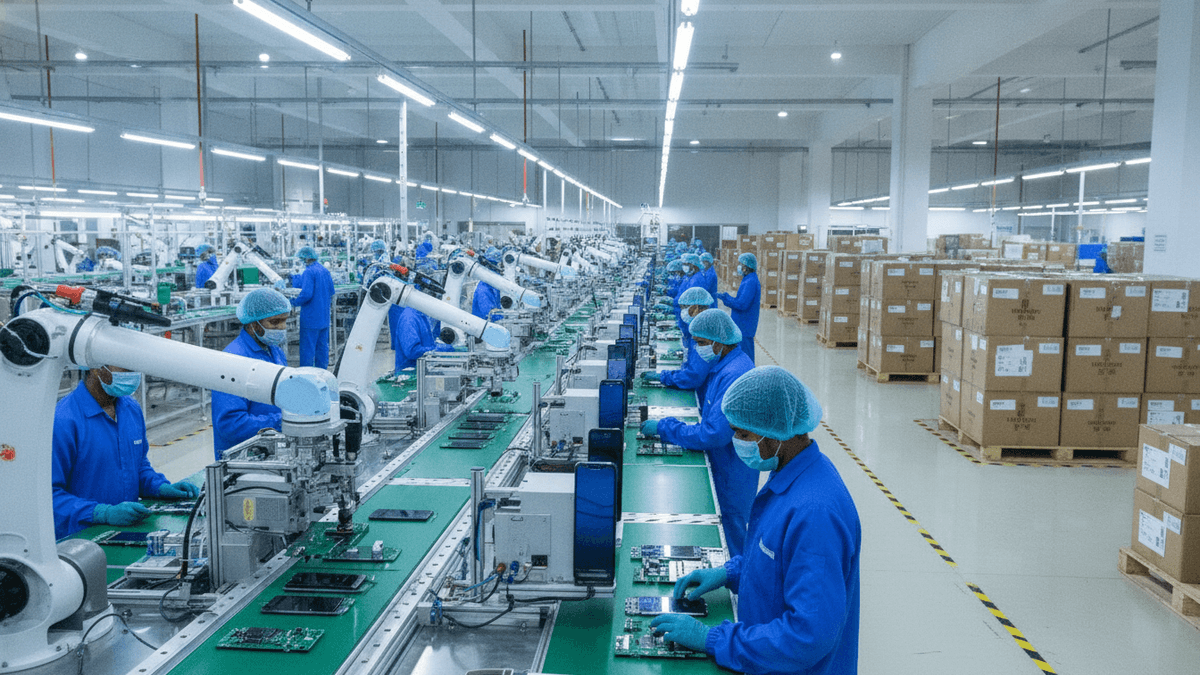
Mobile phone assembly line in an Indian electronics manufacturing facility
The Indian government is proposing a significant extension of tax exemptions for foreign companies involved in contract manufacturing, pushing the deadline to 2041. This move is expected to provide substantial relief and continued incentive for major players like Apple, which relies heavily on contract manufacturing for its products in the country.
The Taxation And Other Laws (Amendment) Bill, 2026, outlines that these tax exemptions will apply to the manufacturing of a range of electronic goods, including mobile phones, laptops, personal computers, tablets, servers, and wearable devices. Furthermore, the proposed amendments include exemptions on income for foreign companies derived from storing and supplying necessary components to their contract manufacturers within India, valid until March 31, 2041.
These tax benefits are specifically tied to facilities established in “customs-bonded areas” (CBAs). CBAs are designated zones where goods can be stored and processed without the immediate payment of customs duties and taxes, effectively placing them outside the direct purview of customs authorities. This structure makes such facilities particularly attractive for export-oriented manufacturing, as goods sold within India from these factories would still be subject to import taxes.
This policy update follows an earlier tax exemption introduced in February of the current year, which was initially set to expire in 2031. The extension signals a longer-term commitment by the Indian government to foster its electronics manufacturing sector.
The initiative appears to be a direct response to lobbying efforts by companies such as Apple. The iPhone maker had reportedly expressed concerns that existing domestic tax laws could classify the ownership of high-value machinery supplied to vendors as a “business connection,” potentially exposing its profits in India to taxation. By extending these exemptions, the government aims to alleviate such concerns and encourage sustained investment and production.
This development coincides with Apple’s deepening engagement in India, both as a critical revenue market and an increasingly important manufacturing hub. The company has reported record quarterly revenues in India, driven by strong demand across its product lines. iPhone exports from India have also seen substantial growth, crossing the ₹2 Lakh Crore mark in FY26, underscoring the nation’s growing role in Apple’s global supply chain.
About the Author