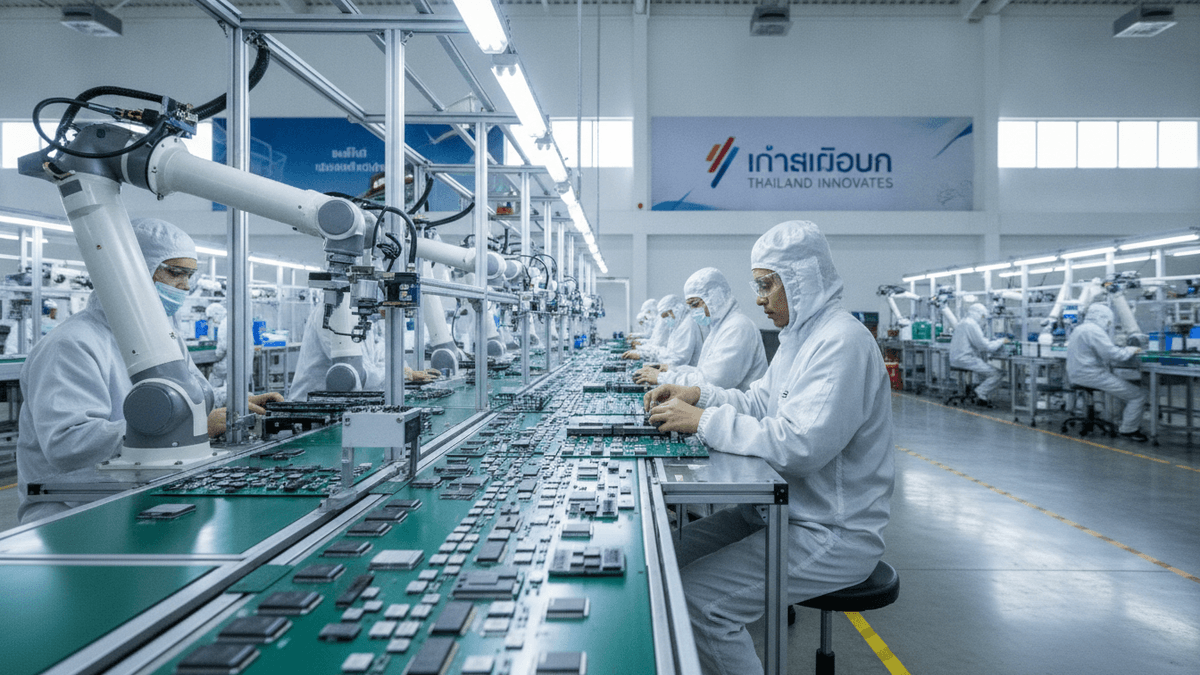
Workers assemble electronic components on a modern production line in a Thai factory.
Thailand’s escalating trade deficit is being re-evaluated by analysts and government officials, shifting from a perception of economic decline to one of significant transformation. This shift is largely attributed to a surge in imports, particularly machinery, raw materials, and electronic components, which are integral to productive investments and the expansion of export-oriented industries.
The Federation of Thai Industries (FTI) has voiced concerns regarding the influx of substandard imports and is advocating for more stringent government regulations. The FTI also emphasizes the need to increase the utilization of local content in investment projects and reduce the economy’s reliance on foreign technology, especially in critical sectors like semiconductors.
While energy imports, particularly crude oil, continue to contribute substantially to the import bill, experts from Kasikorn Research Center (K-Research) and the Ministry of Finance suggest that the rising trade deficit is not a cause for alarm as long as these imports fuel investments that enhance GDP growth and are not solely for immediate consumption.
Data from the Commerce Ministry indicates that over 72% of Thailand’s imports comprise raw materials, semi-finished goods, and capital equipment for production and investment. This underscores that import growth is closely linked to manufacturing and export activities, rather than being driven by consumer demand. Concurrently, export growth is increasingly characterized by industrial and technology-related products, signaling a move towards higher value-added, innovation-driven exports.
To fortify Thailand’s economic competitiveness and secure its position as a regional hub for manufacturing and investment, integrated policies are deemed crucial. These should encompass trade, investment, and industrial development, alongside the swift finalization of trade agreements with key global economies such as the United States, the European Union, and the United Kingdom. Attracting high-quality investment is also paramount to fostering sustainable export growth and strengthening the nation’s industrial base and market access.
About the Author