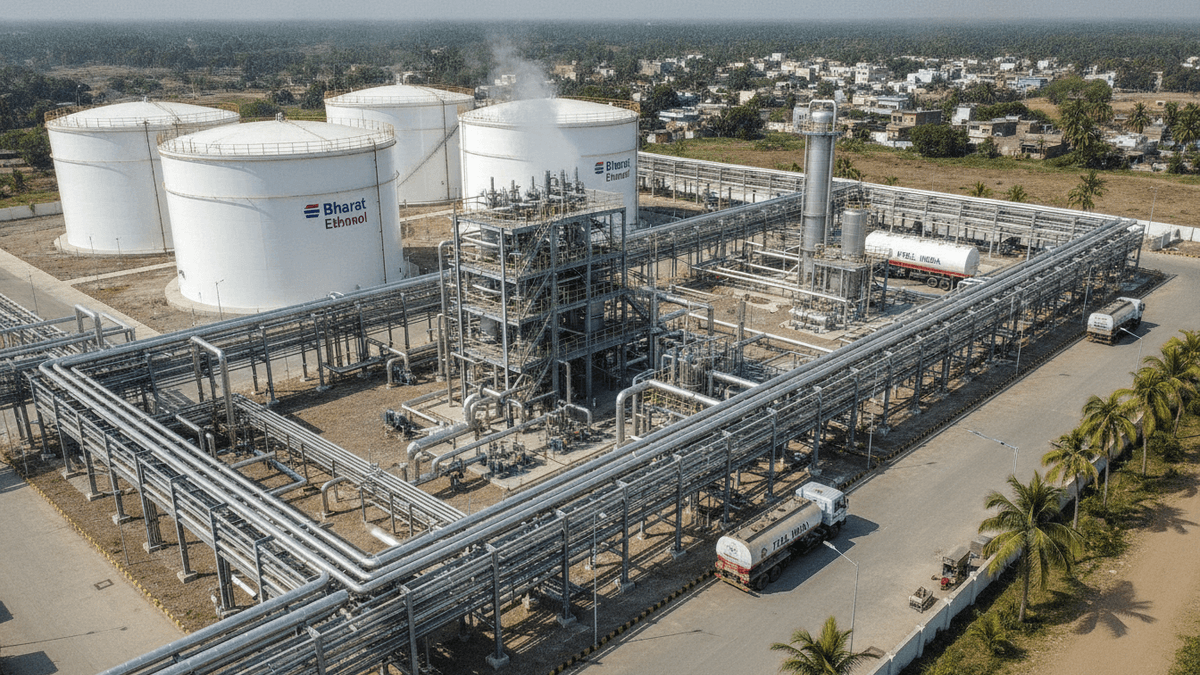
Ethanol blending facility in India, ready for operation
New Delhi, India – The Indian Ministry of Petroleum and Natural Gas has mounted a robust defense of its E20 (20% ethanol blend) fuel policy, emphasizing the substantial sunk costs associated with the development of ethanol infrastructure. The ministry highlighted the financial risks of reverting to a lower blend, such as E10, after significant capital has already been deployed.
The government’s argument centers on the principle of sunk costs, suggesting that investments already made in creating the capacity for E20 fuel should be considered in any future policy decisions. “If, after creating this capacity, we were to arbitrarily revert to E10, what happens to these investments?” the ministry questioned, underscoring the potential for substantial financial losses and stranded assets.
This defense comes as the government aims to accelerate the adoption of higher ethanol blends in gasoline, a move intended to reduce India’s reliance on imported crude oil, lower carbon emissions, and support the domestic agricultural sector, particularly sugarcane farmers. The E20 program has seen considerable investment in refining, distribution, and vehicle compatibility over the past few years.
The ministry’s stance suggests a commitment to the E20 target, signaling to investors and industry stakeholders that policy continuity is expected despite potential challenges or debates surrounding the mandate. The focus on protecting existing investments aims to reassure those who have committed capital to the ethanol supply chain and to encourage further development in the biofuels sector.
About the Author