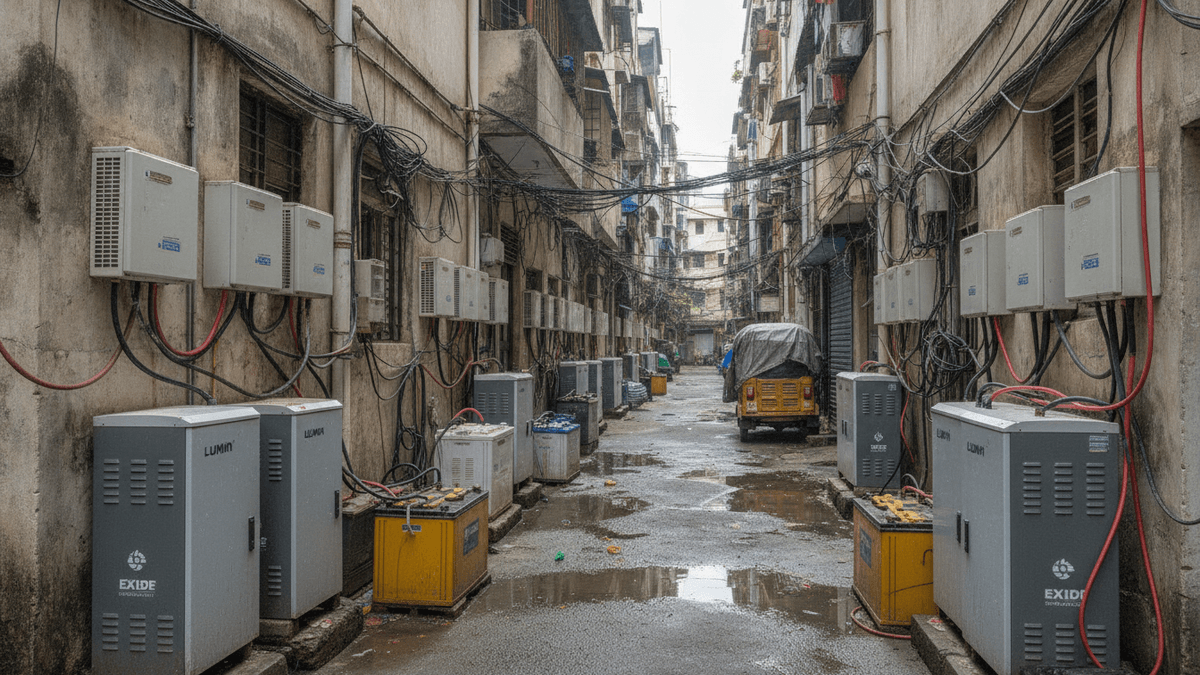
Alleyway with multiple home battery inverters and visible power cables.
India’s residential sector is home to a substantial, often overlooked, fleet of batteries that play a crucial role in maintaining grid stability. These systems, historically a necessity due to the country’s challenges with consistent power supply and grid instability, are now seeing a transformative shift towards more advanced lithium-ion technology.
This evolution promises not only enhanced power output and efficiency for individual households but also contributes significantly to the overall resilience of the national power grid. As peak demand periods strain electricity infrastructure, these distributed energy storage systems act as a vital buffer, mitigating potential blackouts and ensuring a more reliable power supply.
The increasing adoption of lithium-ion batteries in homes marks a critical development in India’s energy landscape. This trend aligns with broader global efforts to integrate renewable energy sources and improve grid management through decentralized energy storage solutions. For investors and policymakers, this growing ‘hidden fleet’ represents a key asset in ensuring energy security and supporting economic activity, particularly in managing the fluctuations inherent in a rapidly developing economy.
About the Author