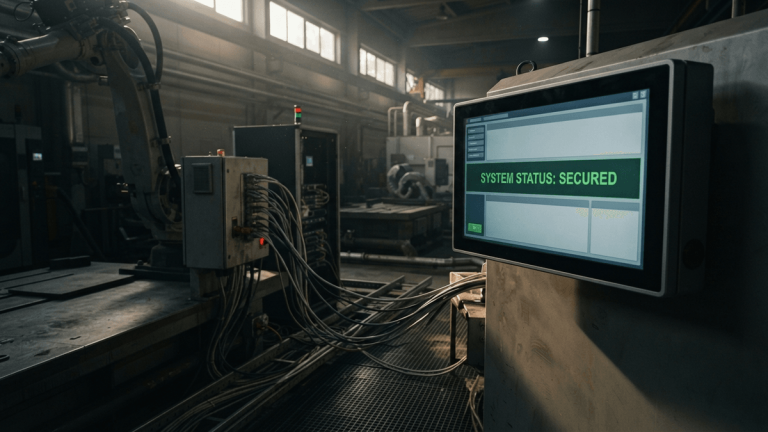
Manufacturing facility producing industrial fire suppression equipment.
The global Fire Protection Equipment Market is projected to experience robust expansion, with market intelligence indicating a surge to USD 71.95 billion by 2035. This represents a significant increase from USD 42.3 billion in 2026, charting a compound annual growth rate (CAGR) of 6.08% over the forecast period. The primary catalysts for this growth are the escalating adoption rates of advanced fire detection systems, sophisticated suppression equipment, and integrated smart safety technologies across commercial, residential, and industrial sectors.
Market analysis reveals that over 70% of commercial facilities are undertaking upgrades to more advanced fire safety solutions, while more than 60% of industrial sites are actively enhancing their fire protection measures. These initiatives are driven by a dual focus on improving workplace safety and ensuring stringent regulatory compliance. Key findings highlight that 72% of facilities are prioritizing safety system upgrades, 68% are focusing on fire preparedness, 65% are implementing monitoring solutions, and 58% are reinforcing compliance measures. Current market trends favor smart detection systems (60%), connected monitoring (55%), wireless technologies (48%), and integrated safety platforms (45%).
The market is segmented into three main categories: Fire Detection Equipment, Fire Suppression Equipment, and Other related systems. Fire Detection Equipment, which includes smoke, heat, and flame detectors, held the largest market share in 2025 at 42.43% (USD 16.92 billion) and is expected to grow at a CAGR of 6.32%. Fire Suppression Equipment, encompassing sprinklers, extinguishers, and gas-based systems, accounted for 36.99% (USD 14.75 billion) in 2025, with a projected CAGR of 6.11%. The ‘Others’ segment, comprising emergency lighting and evacuation systems, was valued at 20.58% (USD 8.20 billion) in 2025, with an anticipated CAGR of 5.68%.
By application, the Commercial sector dominated the market in 2025 with a 44.60% share (USD 17.78 billion), driven by high occupancy levels and stringent safety mandates, and is projected to grow at a CAGR of 6.29%. Industrial applications represented 28.40% (USD 11.32 billion) and are expected to grow at a CAGR of 6.15%, reflecting the specialized safety needs and rising standards in this sector. Residential applications, valued at 27.00% (USD 10.77 billion) in 2025, are experiencing a CAGR of 5.84% due to increased homeowner awareness and the adoption of safety systems.
Major industry players include Honeywell, Johnson Controls, Siemens, Robert Bosch, and Tyco. Geographically, North America commands the largest market share at 34%, followed by Asia-Pacific (30%), Europe (28%), and the Middle East & Africa (8%). Persistent challenges within the market include a shortage of skilled labor (41%), maintenance concerns (39%), installation complexities (35%), and integration difficulties (30%). Future market dynamics are expected to be shaped by digital transformation, smart infrastructure development, automated safety solutions, and the increasing role of AI in predictive monitoring and threat detection, alongside a growing emphasis on environmental sustainability in product development.
About the Author