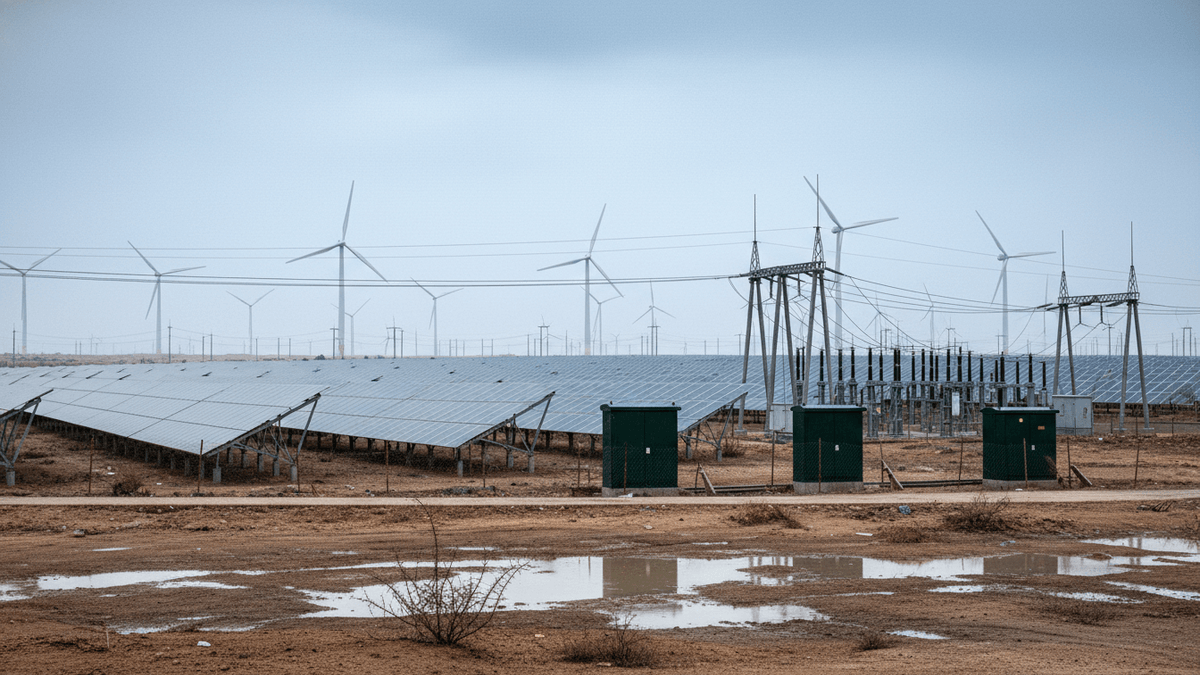
Solar panels and wind turbines in a renewable energy field under an overcast sky.
New power grid regulations introduced by the Indian government are creating unease among clean energy investors, who fear that more stringent penalties for solar and wind projects could significantly impact their returns. This development comes at a critical juncture as India aims to aggressively expand its renewable energy capacity to meet growing energy demands and climate goals.
Industry stakeholders indicate that the revised rules, which impose stricter penalties for deviations in power supply from renewable sources, could reduce the financial viability of projects. For investors, this translates to lower anticipated returns, a crucial factor in their decision-making process for allocating capital to the sector.
The concern is that this policy shift could deter the substantial investment needed to drive India’s energy transition. The country relies heavily on foreign and domestic private capital to fund its ambitious renewable energy targets. Any measure that dampens investor confidence risks slowing down the deployment of clean energy infrastructure, potentially jeopardizing national climate objectives.
Investors are calling for a review of these rules, emphasizing the need for a regulatory environment that supports, rather than hinders, the flow of capital into the renewable energy sector. They argue that while grid stability is important, the penalties must be balanced to avoid discouraging the very investments that are essential for India’s sustainable energy future.
About the Author